
Tag

Kristin Burnham

The Role of Culturally Relevant Practices in Outdoor Education

By Stephen Mullaney May 6, 2026

Outdoor Education

Early in my career I had the opportunity to work with a group of international teachers. The teachers were in the United States doing graduate work at a university that required an outdoor education component.

I greeted them and started things off with some typical outdoor education icebreaker activities, including a game called Help Tag. It’s a typical game of tag where players can “unfreeze” or rescue tagged teammates. However, I noticed the entire group froze. There was definitely something about the game that was unsettling to the participants. They were just standing there.
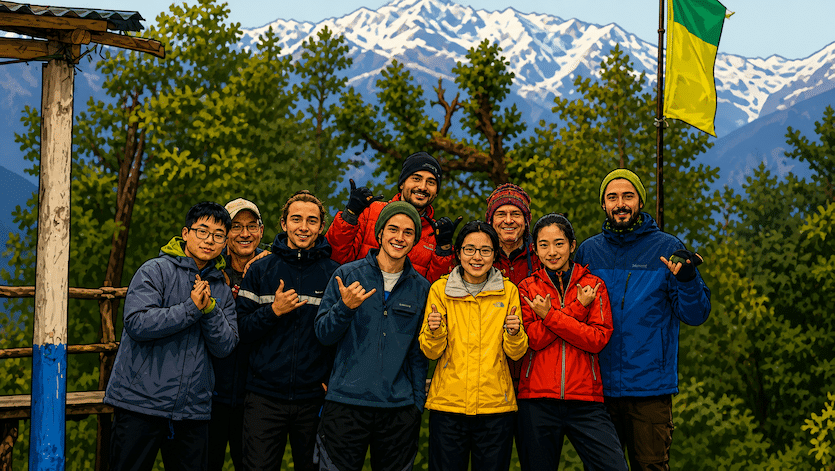
I gathered the group into a circle and asked what was wrong and was told the game wasn’t the way they play tag in their country. In fact, they said the version of the game I was proposing was a little scary.

I felt terrible — it was as if I had done more harm than good.

At the end of the day, using a reflective circle, I created time to debrief the activity. When I asked the group how they might teach a lesson that would reach my intended outcome, instead of just talking, they actually taught me a few games that they would have chosen for the lesson.

This was an incredible learning experience. It opened my eyes to the fact that, despite all the training sessions I had attended, all the mentors and organizations I had worked for, no one ever mentioned the importance of selecting games or using language in relationships tailored to the culture(s) with which I would be working. Instead, we depended on the books and activities we had on hand and simply pick one when facilitating programs.

Those teachers gave me real-time training on being culturally aware and responsive — training I should have received from<!–more–> my employers, the conferences I had attended, and other facilitators and guides I worked with over the years.

Without realizing it, we facilitate activities that often reflect deep cultural biases. Many activities celebrate and explore individualism, conquest, aggression, and competition, which may not be valued by all communities. As a result, students with different backgrounds may experience considerable discomfort and alienation when engaging in such activities.

Historically, the outdoor education industry in the U.S. has not been as culturally responsive as it could. It is often criticized for mirroring Eurocentric norms that emphasize individual adventure and the concept of “empty wilderness” (the idea that indigenous populations have no rights to land simply because they don’t have a legal document to prove ownership of it).

However, in recent years, our industry has evolved, with efforts led by the Association for Experiential Education’s (AEE) Professional and Regional Groups to incorporate culturally sustaining pedagogy, increase accessibility, and recognize culturally diverse relationships in the outdoors.

The questions we need to ask ourselves as an industry are:

1. Where did our industry’s cultural bias come from?
2. How can we get to a better place in outdoor education?

In this post, I answer those questions.

Two Factors Driving Outdoor Education’s Lack of Cultural Responsiveness

    Cultural bias is deeply ingrained in society as a whole. In outdoor education, this bias can be attributed primarily to the following factors:

    Historical lack of representation: The industry has long been dominated by European and North American traditions and values, such as individualism and self-reliance along with white, Western narratives. Additionally, structural barriers, ranging from cost and location to representation among instructors and leadership, can limit who participates and whose perspectives are reflected in lessons and activities. This legacy of exclusion can make the outdoors feel intimidating or unwelcoming to black, indigenous, and people of color (BIPOC) communities.

    Cultural disconnects: Typical outdoor activities often focus on individualistic, competitive, or high-risk challenges, which may not align with the community-focused values of all participants, as I pointed out earlier in this post.

    Moving Toward Culturally Responsive Practices

    The outdoor education industry is moving toward a more culturally responsive model by shifting from a “standard curriculum” to creating spaces that welcome and encourage diverse cultural perspectives and interactive teacher-student relationships.

    Incorporating Diverse Narratives

    To become more inclusive, the outdoor education industry has increasingly incorporated narratives that reflect indigenous perspectives, local community knowledge, and diverse voices in outdoor and adventure-based programming. Here are some specific actions you can take to make your outdoor education programs more responsive to participants from diverse backgrounds:

    • Focus on local and relatable: Shift from exclusively high-adventure wilderness to local, accessible green spaces and incorporate community-specific knowledge. This approach is commonly referred to as place-based education (PBE).
    • Increase accessibility and inclusivity: Remove cost barriers, improve access to gear, and diversify staff.
    • Implement culturally responsive teaching (CRT): CRT is a student-centered, research-based approach that connects students’ cultural backgrounds, languages, and life experiences to their learning. The next section explains CRT in greater detail.

    Numerous peer-revised studies show that outdoor environmental education, when designed thoughtfully, can significantly boost engagement and foster a sense of belonging in nature for diverse communities.

    Shifting to Culturally Responsive Teaching (CRT)

    Traditional teaching methods tend to be teacher centered. The teacher is the expert presenting the information and guidance the student is expected to absorb. It is an approach geared toward passive learning and standardized tests and a method that is outdated and ineffective for many students.

    With CRT, students are engaged more actively in their education. The curriculum is adapted to the student’s cultural framework, making it more relevant to each student’s cultural knowledge, experience, and perspective.

    We have more diverse students/clients today. Cherese Childers-McKee is an associate teaching professor in Northeastern University’s College of Professional Studies in Boston, Massachusetts, and assistant dean of academic and faculty affairs. She says:

    “We don’t have students sitting in front of us with the same background or experience, so instruction has to be different. It needs to build on individual and cultural experiences and their prior knowledge. It needs to be justice-oriented and reflect the social context we’re in now. That’s what we mean when we talk about culturally responsive teaching.”

    CRT benefits students in the following ways:

    • Strengthens students’ sense of identity
    • Promotes equity and inclusivity in learning environments
    • Engages students in the course material
    • Supports critical thinking

    In her article, “5 Culturally Responsive Teaching Strategies,” award-winning reporter writer Kristin Burnham presents the following approaches:

    1. “Activate students’ prior knowledge.”

    When leading group discussions, encourage students to draw on their prior knowledge and experience. This approach anchors new learning to existing knowledge and understanding.

    2. “Make learning contextual.”

    Present new material in the context of the students’ lived experience in their real-world and online communities. For example, if you’re introducing students to Leave No Trace (LNT), encourage them to think about how these principles might help improve their neighborhood or your learning environment.

    3. “Encourage students to leverage their cultural capital.”

    Look for ways that enable students to leverage their cultural capital (the set of unique experiences every individual has). The goal is to create opportunities for students in the minority to feel like — and thus present themselves — as experts on something they are uniquely qualified to share.

    For example, if you’re teaching a lesson on wilderness navigation and survival to students from an urban setting, you may design activities around situational awareness and route-finding. In that way, you’re encouraging students to draw on their experience of reading surroundings, spotting patterns, and noticing what’s out of place in their urban environments. That enables them to assess risks and make quick, practical decisions about movement and safety in wilderness environments.

    Of course, you don’t want to stereotype a particular group’s knowledge and expertise, put a student on the spot, or make a student feel as though they are speaking for everyone in a certain demographic. The right approach requires some finesse.

    Every student has a unique set of assets, resources, and talents, collectively referred to as A.R.T. As a teacher, part of your job is to encourage students to leverage and share their A.R.T.

    4. “Reconsider your classroom setup.”

    Materials and classroom setup include books, manuals, posters, brochures, online content, classroom décor, and more. Carefully examine everything that’s a part of the learning experience with an eye for inclusivity. You want your materials to include different races and ethnicities; cultures (urban, suburban, rural); gender identities; family compositions; ability levels; and so forth. Consider having a diverse group of individuals review the learning space and the materials you use instead of trying to do it all yourself — they may pick up on things you naturally overlook.

    5. “Build relationships.”

    To be effective, instructors must build relationships with their students, so their students will be more receptive and more eager to engage in the learning process. The goal is to make students “feel respected, valued, and seen for who they are.” As you build relationships with students, they build relationships with one another, which creates a dynamic, collaborative learning environment.

    Changing the World Oneself at a Time

    Leo Tolstoy wrote, “Everyone thinks of changing the world, but no one thinks of changing himself.” The only way for the outdoor education industry to progress toward culturally responsive teaching is for each of us to do so. We need to commit to becoming lifelong learners and teacher-students — both instructing and learning from our students.

    I learned a great deal from those international teachers I met early in my career about the importance of being sensitive to cultural differences. Today, I continue to learn from people with different knowledge, skills, and perspectives. This engagement enriches my life and improves how I function in all facets of my life.

    I encourage you to take a similar approach as you interact with students and others from different backgrounds. To have any hope of moving the outdoor education industry forward and improving the world, we need to start by changing ourselves and leading by example.

    About the Author: Stephen Mullaney is the Director of School Partnerships and Staff Development at The National Center for Outdoor & Adventure Education (NCOAE).

    Continue Reading

    TALK TO US

    Have any further questions about our courses, what you’ll learn, or what else to expect? Contact us, we’re here to help!