

Understanding the Roles of Special Teams in Emergency Medical Services (EMS)
EMT TrainingIn American football, every team in the National Football League (NFL) has an offensive unit, a defensive unit, and a small collection of what are often referred to as “special teams.”
These special teams take the field only during critical moments of the game, such as kickoffs and returns, punts and returns, field goals and extra points (after a touchdown.)
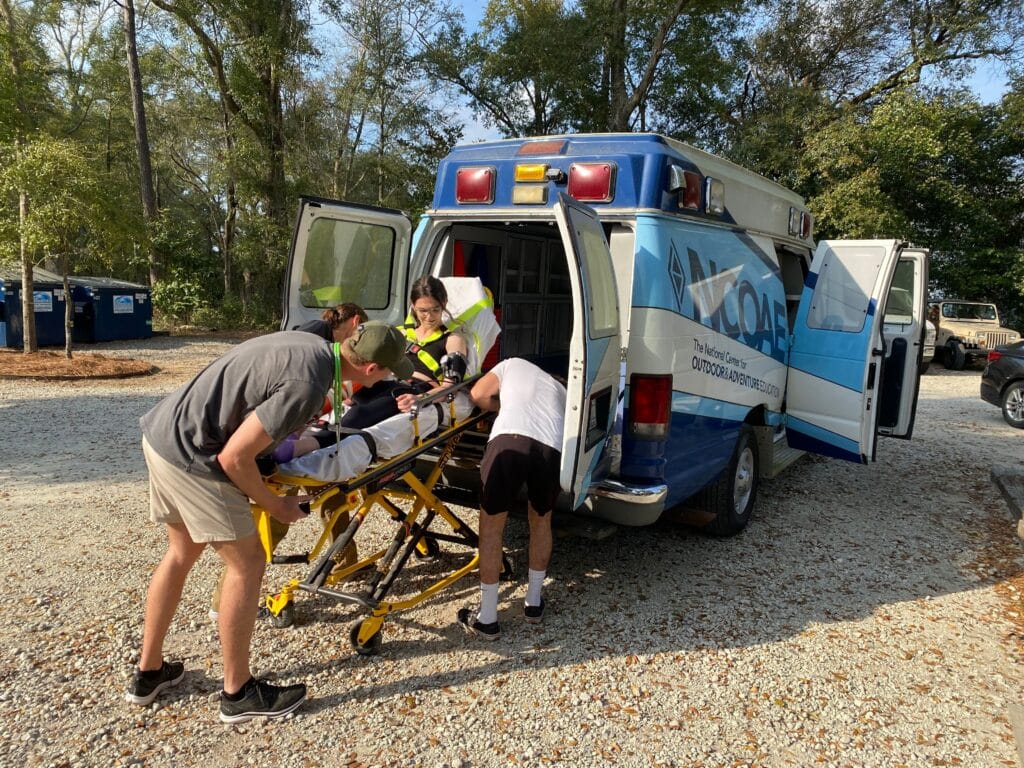
Likewise, emergency medical personnel have conventional teams that respond to ordinary emergencies and they have special teams that are called in to respond to unique, often high-risk situations. These EMS special teams have advanced training and equipment for the following tasks:
- Responding to disasters, such as earthquakes, hurricanes, and tornadoes
- Airlifting seriously ill or injured patients to medical facilities
- Responding to situations involving hazardous materials (HazMat)
- Conducting search and rescue (SAR) operations
- Providing tactical EMS (TEMS) during high-risk law-enforcement operations
- Rescuing people from dangerous scenes (technical rescue)
- Rescuing people in or around water (water rescue)
- Caring for ill or injured parties in backcountry settings (wilderness medicine)
This post brings you up to speed on these EMS special teams and the additional training and certification needed to qualify for each.
Disaster Medical Assistance Team (DMAT)
Disaster Medical Assistance Team members (DMATs) provide medical care in response to large disasters, such as earthquakes, tornadoes, hurricanes, and other mass-casualty events. These teams are organized at the federal level and deploy anywhere they’re needed across the United States.
Most clinical DMAT members must have a current, unrestricted certification or license as one of the following (hours listed are estimates across the U.S., but may vary by state and level):
- EMT: 240 hours
- Advanced EMT (AEMT): 300–500 hours
- Paramedic: 1,000–1,800 hours
- Registered Nurse (RN): 2–4 years
- Physician: 11–15 years
- Physician Assistant (PA): 2–6 years
- Nurse Practitioner (NP): 6–10 years
- Respiratory Therapist (RT): 2–3 years
- Pharmacist: 6–8 years
Flight EMS
Flight EMS involves transporting critically ill or injured patients by rotor-wing (helicopter) or fixed-wing (airplane) aircraft. Medical helicopters are used every day to transport patients from ambulance scenes to specialized hospitals or trauma centers and even from hospital to hospital in special cases. Fixed-wing medical transport typically fly greater distances than helicopters, picking up and dropping off their patients at airports, transferring patients from or to an ambulance crew.
Required certifications to be a flight paramedic or flight nurse typically include: (more…)
Outdoor Recreation Participation Is at a Record High: Now Comes the Real Work
Outdoor IndustryLast year, more people in the United States participated in outdoor recreation than ever before. And while that should energize anyone who believes in the power of outdoor experiences, it prompts those of us who work in outdoor education and adventure programming to pay close attention.
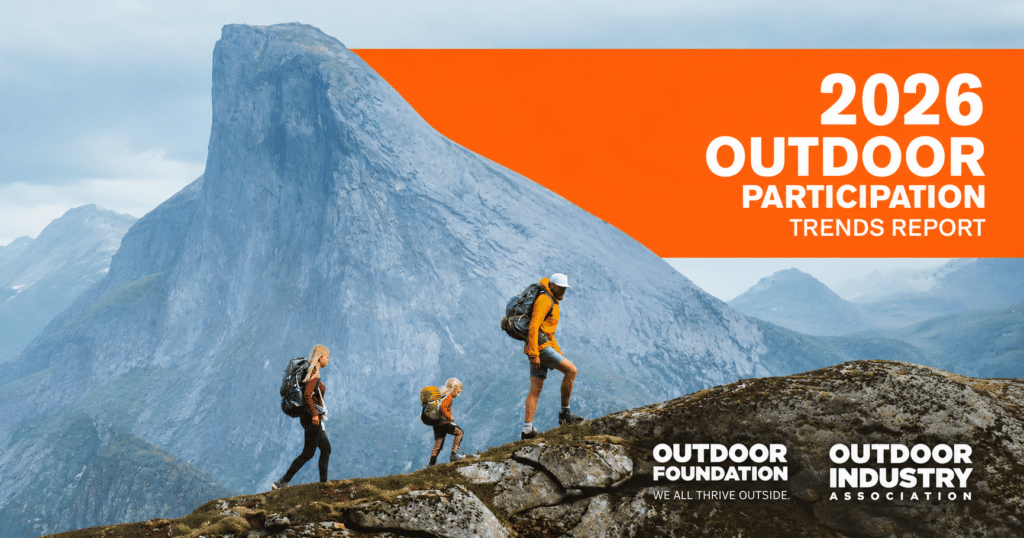
According to the 2026 Outdoor Participation Trends Report from Outdoor Industry Association (OIA) and the Outdoor Foundation, 183.2 million people ages 6 and older in the U.S. participated in outdoor recreation in 2025. That represents 59 percent of the population in that age group and marks the highest participation total ever recorded, according to OIA.
On the surface, that sounds like a straightforward win for human-powered outdoor recreation. More people hiking, camping, paddling, climbing, biking, exploring parks, and choosing time outdoors speaks to a growing desire for connection with the natural world.
However, the deeper story is asking far more of us.
The report also shows that outdoor participation has become more casual. Since 2019, the outdoor recreation participant base in the U.S. has grown by nearly 30 million people. Yet the average participant now engages in about five fewer outings per year than before the COVID-19 pandemic (March 2020 – May 2023). In other words, more people participate, but many do so less often.
For outdoor educators, parents, students, and community leaders, that gap shouldn’t be overlooked. Participation alone does not build lifelong outdoor confidence. Repeated experience, skill development, thoughtful instruction, and supportive community help turn a first step outside into a lasting outdoor life.
Outdoor Recreation Growth Points to a New Kind of Participant
The 2026 Outdoor Participation Trends Report confirms what many outdoor organizations, including The National Center for Outdoor & Adventure Education (NCOAE), have already felt: The outdoor community has expanded. New participants continue to enter the space, and the growth reaches across age, race, ethnicity, gender, income, and education.
For example, the report notes (more…)
Leadership Starts Before Anyone Calls You a Leader
Principles in LeadershipEditor’s Note: This post begins our Principles of Leadership series, created for anyone who wants to better understand what leadership looks like before, during, and after it’s called for. Each post in this series will introduce practical leadership concepts you can apply in a number of environments, including workplaces, classrooms, communities, and other settings. That also includes the backcountry where people depending on one another is a must. The series offers a preview of the deeper instruction, reflection, and application people experience in our forthcoming online course, Principles of Leadership, as well as when participating in any of our summer or semester courses for high school students; 10- or 14-day teen summer adventure camps in Ecuador, Oregon, Alaska, or North Carolina; hybrid and in-person EMT or wilderness medicine trainings; Camp L.E.A.D and Camp L.E.A.D. Pro day camps for youth and teens in North Carolina; Gap Semesters in the Pacific Northwest or North Carilina; custom outdoor programs for colleges, businesses, and non-profits; or our14-day Instructor Course.
————
Picture yourself in the backcountry with a group of eager outdoor enthusiasts that has reached a decision point. Everyone knows one another, either through school, community or friends of friends scenarios.
The route ahead looks manageable, although the group is tired. Someone should speak up. Someone needs to ask the right question. Someone could help the group pause, think, communicate, and move forward with purpose.
No one hands you a title in that moment. Nobody announces, “You’re the leader now.” Still, leadership might begin right there.

At The National Center for Outdoor & Adventure Education (NCOAE), we believe leadership starts before a title appears. It begins when someone chooses to take responsibility for their role in a group, and it grows through self-awareness, clear communication, sound judgment, and a willingness to help others move toward shared objectives and goals in a sound and informed way.
An NCOAE course gives participants a real setting to practice leadership, but the skills themselves travel far beyond the outdoor course environment. Leadership can show up in a classroom discussion, a workplace project, a volunteer effort, a family decision, a peer group, or any situation where people need direction and clarity.
Leadership Begins With Responsibility
Many people may think leadership starts when someone receives authority. A job title. A role assignment. A position at the front of the group. An ownership stake in a company.
In practice, leadership often begins earlier.
It begins when you notice (more…)
TALK TO US
Have any further questions about our courses, what you’ll learn, or what else to expect? Contact us, we’re here to help!