

Understanding the Roles of Special Teams in Emergency Medical Services (EMS)
EMT TrainingIn American football, every team in the National Football League (NFL) has an offensive unit, a defensive unit, and a small collection of what are often referred to as “special teams.”
These special teams take the field only during critical moments of the game, such as kickoffs and returns, punts and returns, field goals and extra points (after a touchdown.)
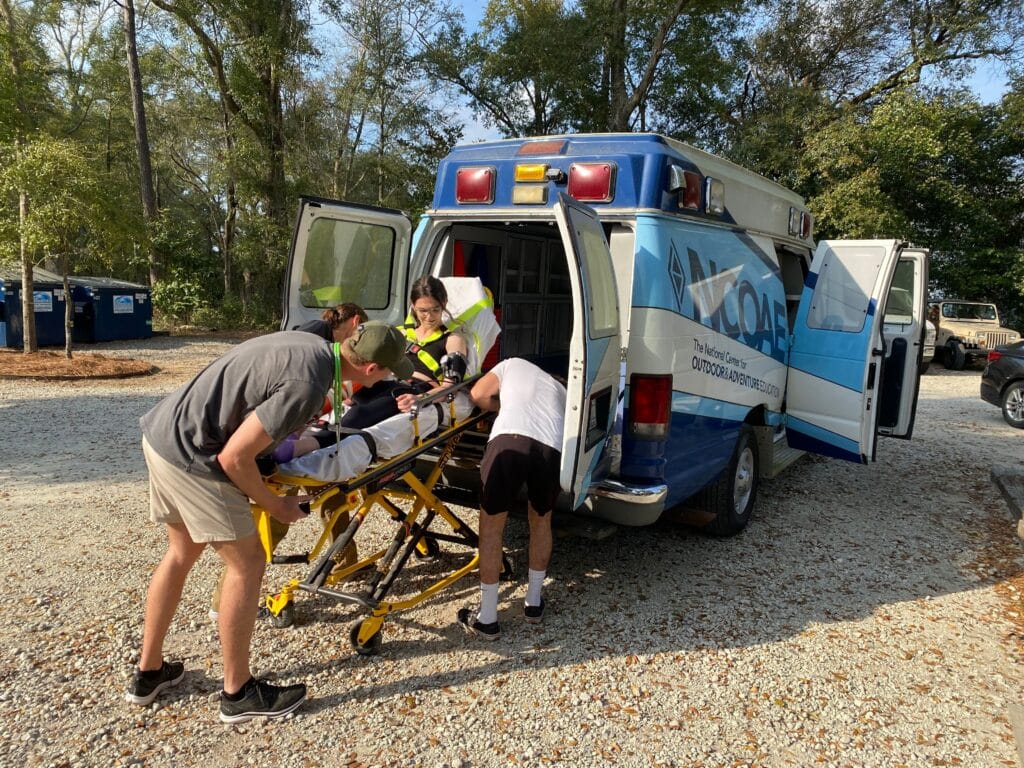
Likewise, emergency medical personnel have conventional teams that respond to ordinary emergencies and they have special teams that are called in to respond to unique, often high-risk situations. These EMS special teams have advanced training and equipment for the following tasks:
- Responding to disasters, such as earthquakes, hurricanes, and tornadoes
- Airlifting seriously ill or injured patients to medical facilities
- Responding to situations involving hazardous materials (HazMat)
- Conducting search and rescue (SAR) operations
- Providing tactical EMS (TEMS) during high-risk law-enforcement operations
- Rescuing people from dangerous scenes (technical rescue)
- Rescuing people in or around water (water rescue)
- Caring for ill or injured parties in backcountry settings (wilderness medicine)
This post brings you up to speed on these EMS special teams and the additional training and certification needed to qualify for each.
Disaster Medical Assistance Team (DMAT)
Disaster Medical Assistance Team members (DMATs) provide medical care in response to large disasters, such as earthquakes, tornadoes, hurricanes, and other mass-casualty events. These teams are organized at the federal level and deploy anywhere they’re needed across the United States.
Most clinical DMAT members must have a current, unrestricted certification or license as one of the following (hours listed are estimates across the U.S., but may vary by state and level):
- EMT: 240 hours
- Advanced EMT (AEMT): 300–500 hours
- Paramedic: 1,000–1,800 hours
- Registered Nurse (RN): 2–4 years
- Physician: 11–15 years
- Physician Assistant (PA): 2–6 years
- Nurse Practitioner (NP): 6–10 years
- Respiratory Therapist (RT): 2–3 years
- Pharmacist: 6–8 years
Flight EMS
Flight EMS involves transporting critically ill or injured patients by rotor-wing (helicopter) or fixed-wing (airplane) aircraft. Medical helicopters are used every day to transport patients from ambulance scenes to specialized hospitals or trauma centers and even from hospital to hospital in special cases. Fixed-wing medical transport typically fly greater distances than helicopters, picking up and dropping off their patients at airports, transferring patients from or to an ambulance crew.
Required certifications to be a flight paramedic or flight nurse typically include: (more…)
TALK TO US
Have any further questions about our courses, what you’ll learn, or what else to expect? Contact us, we’re here to help!