
Outdoor Leadership Training
Principles in Leadership & Environmental Ethics
Summer Semester — Keystone College Leadership Expedition | La Plume, Pennsylvania & Adirondack Mountains, New York
Take leadership out of the classroom and into the real world with an immersive 32-day summer semester NCOAE outdoor leadership expedition designed in partnership with Keystone College.
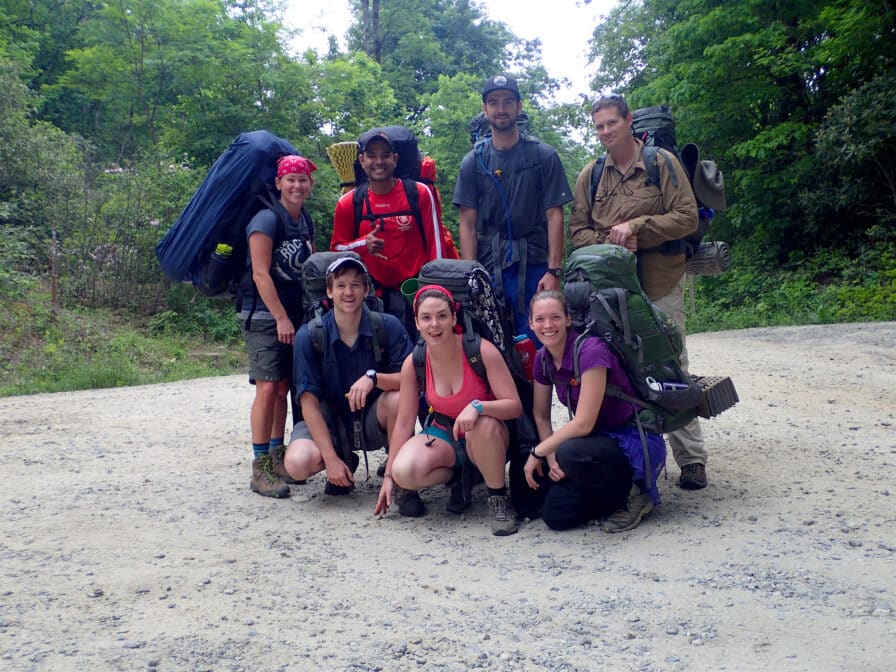
Adventure First.
At The National Center for Outdoor & Adventure Education (NCOAE), we believe some of the most meaningful lessons in leadership happen outside the traditional classroom.
The Keystone College/NCOAE 32-day Summer Semester Leadership Expedition combines academics, outdoor adventure, and experiential education into an immersive field-based course in Principles in Leadership & Environmental Ethics.
Beginning on the Keystone College campus and continuing into the Adirondack Mountains of New York, students travel, live, work, and learn together while exploring leadership in real time. Throughout the expedition, students are challenged to communicate effectively, make decisions, solve problems, manage uncertainty, work as a team, and step into leadership roles.
The natural environment becomes the classroom.
Rather than simply reading about leadership theories, students have opportunities to practice leadership, reflect on their experiences, receive feedback, and better understand their own personal leadership styles.
During two extended backpacking expeditions in the Adirondacks, students develop practical outdoor skills necessary for traveling and learning in remote environments while exploring the relationship between leadership, risk management, environmental responsibility, and teamwork.
EDUCATION ALWAYS
The academic foundation of the course focuses on understanding leadership and learning how to apply it effectively across a variety of groups, environments, organizations, and real-world situations.
Students explore their own leadership traits and philosophies while examining how those characteristics influence their individual leadership styles.
Course concepts include:
- Leadership principles, theories, and practices
- Personal leadership styles
- Emotional intelligence
- Ethical leadership
- Team leadership and team culture
- Effective communication
- Collaboration
- Conflict resolution
- Judgment and decision-making
- Stress management
- Risk management
- Crisis leadership
- Environmental ethics and sustainability
- Outdoor leadership and expedition skills
- Reflection and personal growth
Students move between academic discussion and practical application throughout the experience, creating an environment where what is learned can immediately be put into practice.
Course Details
x
Six (6) credits available to eligible students through Keystone College
WHAT YOU’LL LEARN
Upon successful completion of the course, students should be able to:
- Identify and explain core leadership principles, theories, concepts, and practices.
- Recognize different leadership styles and determine when different approaches may be effective.
- Understand the role emotional intelligence and stress management play in effective leadership.
- Practice communication, conflict resolution, judgment, and decision-making.
- Understand ethical leadership and its role in building trust.
- Develop strategies for creating effective teams and a culture of collaboration.
- Identify uncertainties and risks that may threaten goals, projects, or operations.
- Apply strategies for avoiding unnecessary risk and reducing the consequences of unavoidable risk.
- Develop essential outdoor leadership and expedition skills.
- Explore the interconnectedness of environmental ethics, sustainability, and responsible leadership.
- Analyze leadership successes and challenges through case studies and real-world experiences.
- Apply leadership principles to real-world problems and situations.
EXPERIENCE THE DIFFERENCE
This isn’t leadership education built entirely around lectures.
Students learn through a combination of:
Field Experience
Two extended Adirondack backpacking expeditions provide constantly changing environments where students apply leadership concepts in real time.
Leadership Rotations
Students have opportunities to step into leadership positions, make decisions, navigate, communicate plans, manage daily expedition responsibilities, and guide their peers.
Team Challenges
Wilderness travel requires collaboration, problem-solving, communication, adaptability, and shared responsibility.
Outdoor Skills
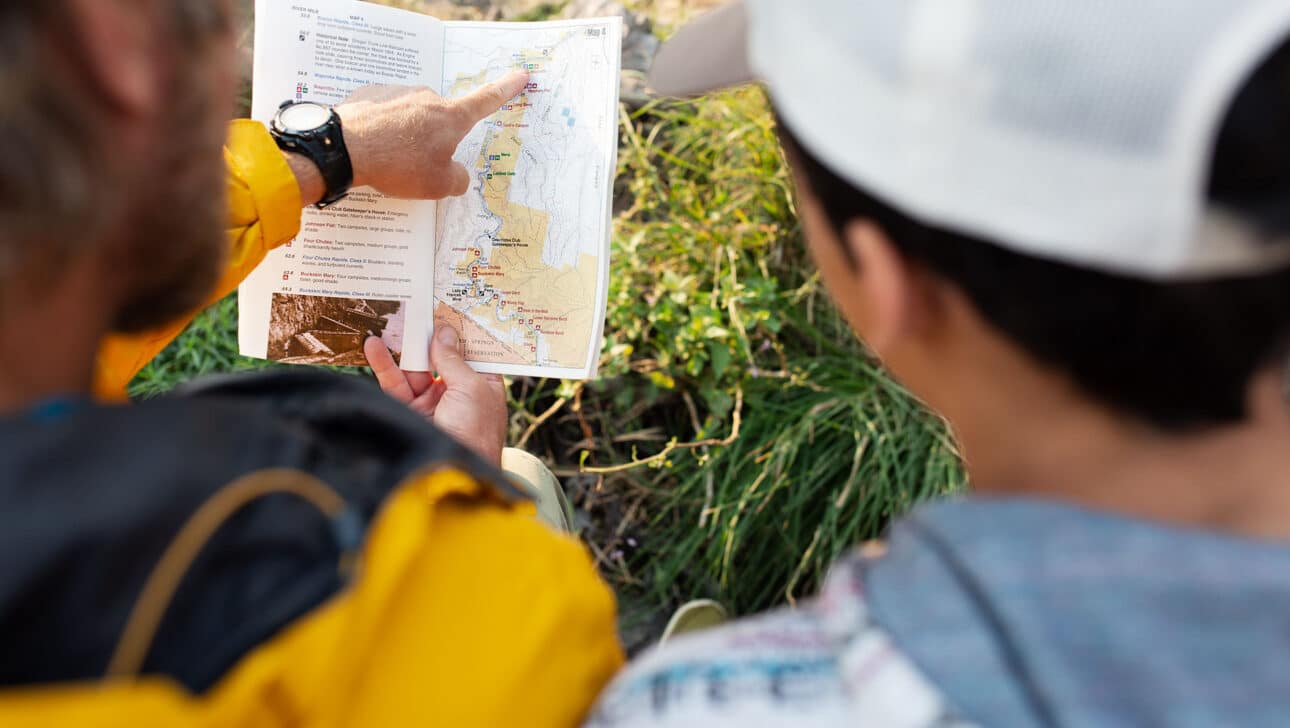
Students develop the practical skills necessary to safely travel, live, and learn in remote outdoor environments, including backcountry travel, navigation, expedition planning, campcraft, and environmental stewardship.
Case Studies & Discussion
Leadership theories and real-world examples provide the academic framework for understanding what students experience in the field.
Reflection
Intentional reflection helps students connect their experiences to their own developing leadership philosophy.
WHY TAKE THIS COURSE?
Leadership is relevant to virtually every profession.
Whether you plan to work in business, education, healthcare, public service, science, outdoor recreation, entrepreneurship, or another field, your ability to communicate, make decisions, collaborate, manage uncertainty, and lead others will matter.
The Keystone College NCOAE Leadership Expedition gives students the opportunity to develop those abilities in an environment where leadership isn’t theoretical.
You actually have to use it.
Students leave the course with greater insight into their own leadership style, experience working within a team, practical approaches to decision-making and risk management, and a stronger understanding of what effective leadership looks like when circumstances become challenging.

ITINERARY HIGHLIGHTS
- 32-day immersive summer semester
- Keystone College campus-based academic instruction
- Two extended Adirondack backpacking expeditions
- Experiential, field-based education
- Leadership theory combined with real-world application
- Personal leadership-style exploration
- Team leadership and collaboration
- Communication and conflict-resolution skills
- Judgment and decision-making
- Risk-management fundamentals
- Environmental ethics and sustainability
- Outdoor leadership and expedition skills
- Student leadership opportunities
- Guided reflection and feedback
YOUR CLASSROOM IS OUT THERE
NCOAE was built around a simple idea: meaningful education doesn’t have to happen behind a desk.
During the Keystone College Leadership Expedition, students transition from the college campus to the Adirondack wilderness, using the outdoor environment as a living laboratory for leadership.
Every day presents new opportunities to communicate, collaborate, make decisions, adapt, and lead.
Traveling together through mountains, forests, lakes, remote campsites, and an interconnected wilderness trail system, students experience firsthand how leadership changes when people are tired, weather changes, plans need to be adjusted, uncertainty increases, or a team needs someone to step forward.
Those experiences make the concepts discussed in class tangible — and memorable.
WHERE YOU’LL BE
The academic experience begins and concludes at Keystone College in La Plume, Pennsylvania, located just north of Scranton.
Following the initial campus-based academic and expedition-preparation phase, students travel north into New York’s Adirondack Mountains for the wilderness portion of the course.
The primary expedition area is planned for the southeastern Adirondacks and Pharaoh Lake Wilderness, a large wilderness landscape characterized by forested mountains, remote lakes and ponds, rugged trails, primitive campsites, and an extensive interconnected trail system.
The Pharaoh Lake Wilderness contains nearly 70 miles of maintained trails across more than 46,000 acres, creating opportunities to build extended backpacking routes while adapting mileage, terrain, and daily objectives to the needs and abilities of the group.
The course includes two extended backpacking sections, separated by a two-day period for resupply, equipment maintenance, recovery, reflection, and preparation for the second expedition.
The first expedition emphasizes instruction, outdoor skills, group development, leadership rotations, and putting leadership theory into practice. During the second expedition, students assume progressively greater responsibility for navigation, daily planning, communication, risk assessment, decision-making, and expedition leadership.
The Adirondacks provide more than a backdrop for the course. The changing terrain, weather, physical demands, route decisions, group dynamics, and realities of extended wilderness travel become an integral part of the curriculum.
The wilderness becomes the leadership laboratory.
Keystone College & The Adirondack Mountains
- Keystone College – La Plume, Pennsylvania
- Southeastern Adirondacks
- Pharaoh Lake Wilderness
WHO SHOULD TAKE THIS COURSE?
This course is designed for students who want more than a traditional classroom leadership course.
No previous outdoor leadership experience is required.
Students should arrive ready to participate, work as part of a team, spend extended time outdoors, challenge themselves, contribute to their group, and occasionally step outside their comfort zones.
Most importantly, students should arrive curious about one question:
What kind of leader do I want to become?
HAVE QUESTIONS? LET’S TALK.
Wondering what 32 days with NCOAE and Keystone College will look like, how to prepare for the Adirondacks, or whether this course fits what you’re looking for? Talk with our team before you make your decision. We’re happy to answer your questions and help you understand what to expect. Call us at (910) 399-8090, email us at info@ncoae.org, or reach us using the Contact Form here on our website
DATES
Frequently Asked Questions
Is this an academic course or an outdoor expedition?
It’s both.
The program combines academic study in leadership and environmental ethics at Keystone College with two immersive NCOAE backpacking expeditions in the Adirondack Mountains. Students learn leadership concepts and then have opportunities to apply those concepts through wilderness travel, team challenges, decision-making, problem-solving, and student leadership roles.
Can I earn college credit for this course?
Yes. You can earn up to 6 college credits for successfully completing this course.
Do I have to attend Keystone College to earn academic credit for this course?
No. You do not have to be a Keystone College student to earn academic credit. However, you will need to register for the course through Keystone College to receive college credit. Those credits can then be transferred to your home college or university, subject to that institution’s transfer-credit policies.
Do I need previous outdoor experience?
No. Students receive instruction in the outdoor and expedition skills necessary to participate successfully in the course.
How much time will we spend in the Adirondacks?
The 32-day semester includes an initial campus-based phase at Keystone College followed by two extended Adirondack backpacking expeditions. A two-day flex period between expeditions allows for resupply, equipment maintenance, recovery, reflection, and preparation before returning to the wilderness.
Will I have opportunities to lead?
Yes. Leadership opportunities are intentionally built into the program. Students experience leadership both as a leader and as a contributing member of a team, with progressively greater responsibility during the second Adirondack expedition.
What makes this different from a traditional leadership class?
The biggest difference is application.
Instead of only discussing communication, teamwork, decision-making, risk, and leadership, students experience situations where those skills matter. Those experiences are followed by reflection and discussion to help transfer learning beyond the expedition.
What will I take away from the experience?
Students leave with a deeper understanding of their personal leadership style, greater confidence working with others, practical leadership and decision-making experience, stronger communication skills, and a framework for continuing to
Request More Info
12 Day TEEN LEADERSHIP EXPEDITION