

Communication Breakdown: Not an Option in Wilderness Medicine
Wilderness MedicineIf you’ve ever heard Led Zeppelin’s 1969 classic “Communication Breakdown,” you know how quickly things can go sideways when people aren’t on the same page.
In this case, the second greatest rock ’n’ roll band of all time (yeah, I said it and we can discuss that issue later) was singing about communication in a romantic relationship. In wilderness medicine, the stakes are a bit higher than a broken heart, meaning you could be talking about a full-on cardiac arrest!
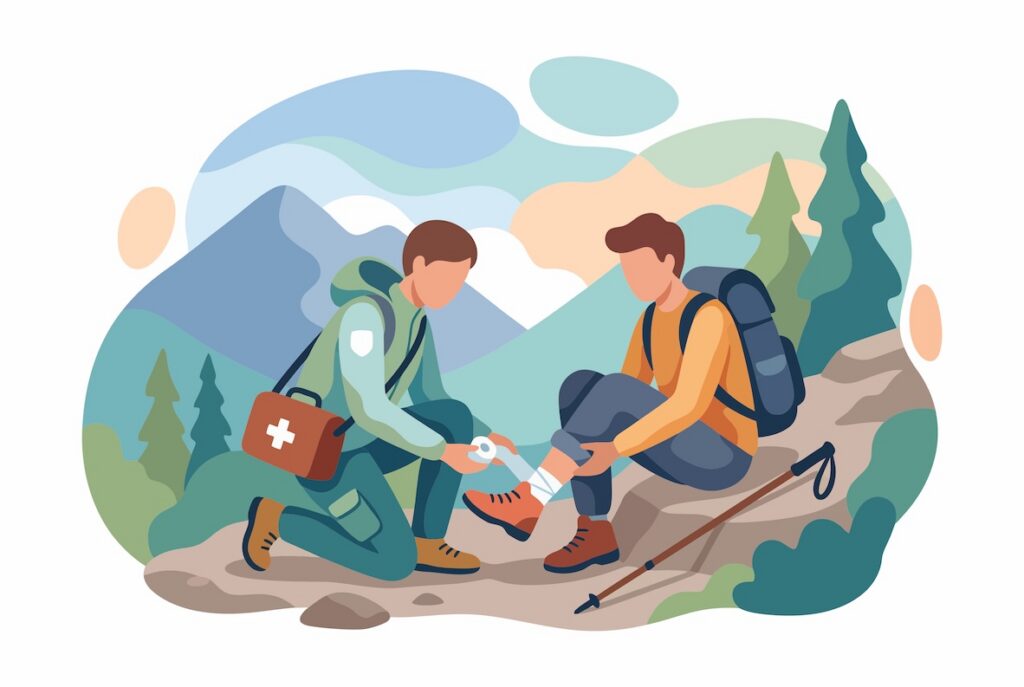
Out in the backcountry, whether you’re dealing with a twisted ankle or a full-blown medical emergency, clear, calm communication can make the difference between an effective treatment/evacuation and a chaotic situation that spirals out of control.
This post presents guidance on how to communicate with sick or injured parties in emergency settings and keeping patients and their loved ones informed and reassured, so you can get on with the business of providing effective medical treatment.
Getting Up to Speed on Therapeutic Communication Fundamentals
Therapeutic communication is simply a set of best practices for helping patients feel heard, understood, and a little less freaked out when they’re sick, injured, exhausted, and at wit’s end. And in the backcountry, that matters — a lot.
It starts before you even say a word. Nonverbal cues are the equivalent of making a good first impression. These can be broken down into three categories: (more…)
The Role of Culturally Relevant Practices in Outdoor Education
Outdoor EducationEarly in my career I had the opportunity to work with a group of international teachers. The teachers were in the United States doing graduate work at a university that required an outdoor education component.
I greeted them and started things off with some typical outdoor education icebreaker activities, including a game called Help Tag. It’s a typical game of tag where players can “unfreeze” or rescue tagged teammates. However, I noticed the entire group froze. There was definitely something about the game that was unsettling to the participants. They were just standing there.

I gathered the group into a circle and asked what was wrong and was told the game wasn’t the way they play tag in their country. In fact, they said the version of the game I was proposing was a little scary.
I felt terrible — it was as if I had done more harm than good.
At the end of the day, using a reflective circle, I created time to debrief the activity. When I asked the group how they might teach a lesson that would reach my intended outcome, instead of just talking, they actually taught me a few games that they would have chosen for the lesson.
This was an incredible learning experience. It opened my eyes to the fact that, despite all the training sessions I had attended, all the mentors and organizations I had worked for, no one ever mentioned the importance of selecting games or using language in relationships tailored to the culture(s) with which I would be working. Instead, we depended on the books and activities we had on hand and simply pick one when facilitating programs.
Those teachers gave me real-time training on being culturally aware and responsive — training I should have received from (more…)
TALK TO US
Have any further questions about our courses, what you’ll learn, or what else to expect? Contact us, we’re here to help!