

Being a Good Samaritan in Wilderness Medicine Without Becoming the Target of a Lawsuit
Wilderness MedicineIn a litigious (lawsuit-happy) society like the one we hear about all-too frequently these days, medical professionals — and that includes wilderness medicine providers —absolutely must remain aware of the possibility of being sued by a patient or a patient’s family.
For certain, most states have “Good Samaritan” laws to protect those who volunteer to help others in emergencies against frivolous lawsuits, but those laws vary from state to state and may have some exceptions.
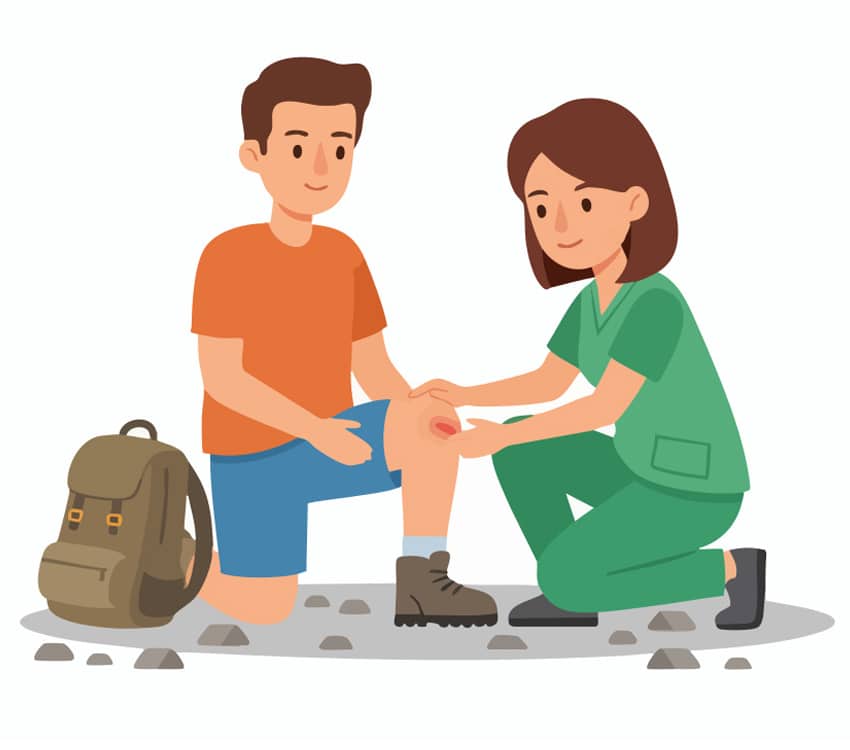
This blog post brings you up to speed on what Good Samaritan laws are, what they entail, and how you may be able to reduce your chances of becoming a target of lawsuits when you’re doing your best to help a fellow human in distress.
Shameless disclaimer: I am not an attorney, nor am I overly fond of them, except for The National Center for Outdoor Adventure and Education’s (NCOAE) legal counsel — they’re great! This post is intended to provide some basic guidance for providing medical care in a wilderness setting in a manner that could prevent you from becoming the target of a lawsuit. However, it is no substitute for professional legal advice.
What Is a Good Samaritan?
The Good Samaritan comes from a
(more…)Survival in Balance: Autonomic Nervous System Control in Wilderness Medicine
Wilderness MedicineIn the wilderness, balance is the foundation of survival. A misstep on uneven terrain, poor pacing on a long trek, or exposure to extreme weather can quickly tip the scales from stability to crisis.
Nature itself operates in balance: day and night regulate temperature, along with alternating periods of activity and rest; ecosystems rely on opposing forces working together (predator-prey dynamics, life and death, photosynthesis and respiration). Muscle and bone development is largely driven by the body’s efforts to overcome gravitational forces, and the very act of walking involves shifting balance from one leg to the other.
Nothing captures the concept of complementary opposites working together to establish balance and harmony than the yin and yang of ancient Chinese philosophy. It applies to all aspects of life — night and day, hot and cold, good and evil, masculinity and femininity, happiness and sadness, health and illness.

In the human body, that balance is maintained through homeostasis, largely regulated by the autonomic nervous system — the part of the nervous system that regulates involuntary physiological processes, including heart rate, blood pressure, breathing, and digestion. The autonomic nervous system is able to perform its magic thanks to two complementary components — the sympathetic and parasympathetic nervous systems.
(more…)TALK TO US
Have any further questions about our courses, what you’ll learn, or what else to expect? Contact us, we’re here to help!