

The Role of Culturally Relevant Practices in Outdoor Education
Outdoor EducationEarly in my career I had the opportunity to work with a group of international teachers. The teachers were in the United States doing graduate work at a university that required an outdoor education component.
I greeted them and started things off with some typical outdoor education icebreaker activities, including a game called Help Tag. It’s a typical game of tag where players can “unfreeze” or rescue tagged teammates. However, I noticed the entire group froze. There was definitely something about the game that was unsettling to the participants. They were just standing there.
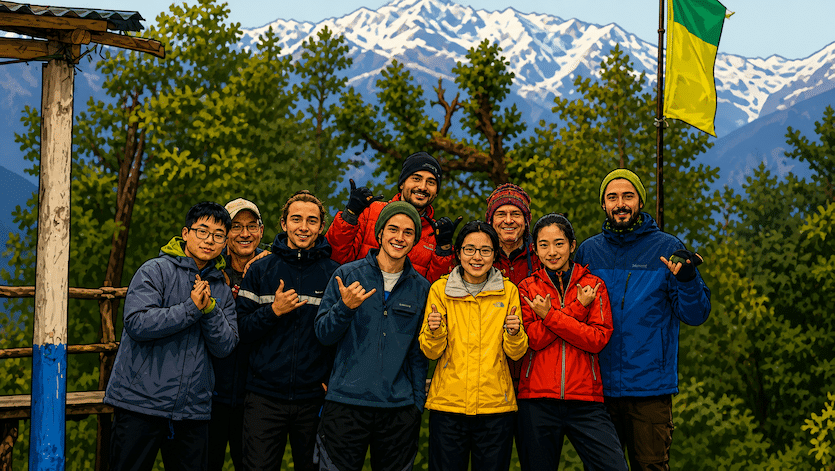
I gathered the group into a circle and asked what was wrong and was told the game wasn’t the way they play tag in their country. In fact, they said the version of the game I was proposing was a little scary.
I felt terrible — it was as if I had done more harm than good.
At the end of the day, using a reflective circle, I created time to debrief the activity. When I asked the group how they might teach a lesson that would reach my intended outcome, instead of just talking, they actually taught me a few games that they would have chosen for the lesson.
This was an incredible learning experience. It opened my eyes to the fact that, despite all the training sessions I had attended, all the mentors and organizations I had worked for, no one ever mentioned the importance of selecting games or using language in relationships tailored to the culture(s) with which I would be working. Instead, we depended on the books and activities we had on hand and simply pick one when facilitating programs.
Those teachers gave me real-time training on being culturally aware and responsive — training I should have received from (more…)
Cognia Accreditation Further Demonstrates NCOAE’s Commitment to Excellence
AccreditationHere at The National Center for Outdoor & Adventure Education (NCOAE), we are known to be among the best in class among providers of outdoor education and wilderness-based adventures for youths and adults, and wilderness medical and EMT training for adults.
To that end, we are excited to announce that we are currently in the final stage of seeking accreditation with Cognia, a globally recognized nonprofit organization acknowledged by the U.S. Department of Education, that provides accreditation, certification, assessment, and professional learning services for continuous improvement to public, private, and independent postsecondary schools, among others.

NCOAE attributes its success to several qualities that set us apart from others who offer the same or similar services and experiences. These include our highly knowledgeable, experienced, and passionate leadership team and staff and our unique core curriculum, carefully crafted to positively impact each participant’s self-confidence, interpersonal relationships, and commitment to fulfilling their civic and environmental responsibilities.
But we don’t expect you to take our word for it. Several highly reputable, independent organizations have given us their seals of approval through their accreditation programs, including the Association for Experiential Education (AEE) and the Commission on Accreditation for Pre-Hospital Continuing Education (CAPCE). Further boosting our street cred is that fact that both the North Carolina Office of Emergency Medical Services and the State of North Carolina have approved us to offer an intensive 21-day EMT-Basic training curriculum.
Why Cognia Accreditation Matters
Since 1895, Cognia, most well-known as the Southern Association of Colleges and Schools-Council on Accreditation and School Improvement (SACS/CASI) rebranded about five years ago, offers research-based performance standards that are created with one end in mind — to ensure high-quality learning. They define the practices that are essential for (more…)
AEE’s Podcast Highlights NCOAE’s Zac and Celine Adair
AEELike many podcasts that host informal chats with founders of businesses, organizations, and charities, Zac and Celine Adair recently offered listeners a glimpse into the heart and soul of their “baby,” The National Center for Outdoor & Adventure Education (NCOAE).
Zac and Celine, NCOAE’s co-founders, are showcased in Episode 15 of “It’s In the Experience,” presented by the Association for Experiential Education (AEE) and hosted by Sherry Bagley, AEE’s executive director. To listen to the 45-minute episode, which is titled Overcoming Challenges: Creating Positive Experiences in Experiential Education, subscribe to “It’s In the Experience” on Apple Podcasts, Spotify, Podcast App, or wherever you listen to podcasts.
Or, you can listen to Overcoming Challenges: Creating Positive Experiences in Experiential Education by clicking on the audio file below:
Episode Highlights
Here’s a high-level overview of what’s featured in the episode, which was published by AEE in mid-June of this year: (more…)
2023 Outdoor Industry Conferences for Outdoor Educators
ConferencesAs we do each year, we are once again taking advantage of this space to inform you about opportunities for you, your staff, and your organization to participate in professional development, networking, and business growth and development available at upcoming outdoor industry conferences.
In this edition, we are spotlighting nine events taking place between now and the end of this year, as well as bringing to your attention six more events scheduled for the first part of 2024 that might be worthwhile marking on your calendar.
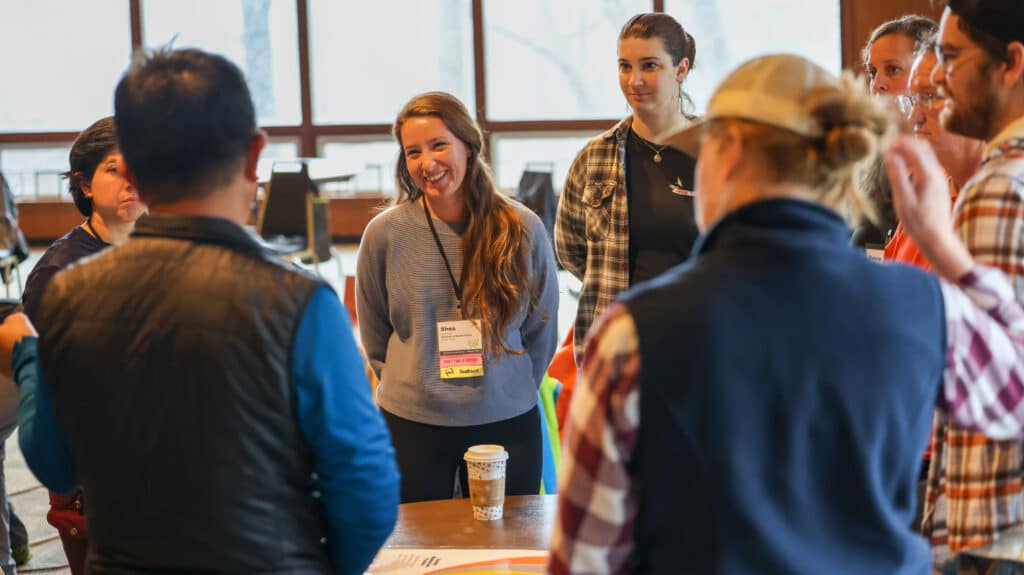
5TH ANNUAL OUTDOOR ECONOMY CONFERENCE
Sept. 18-21, 2023 | Cherokee, North Carolina
Website: https://outdooreconomy.org
Why you should attend: This in-person, multi-day event is designed to foster intentional connections among stakeholders across the outdoor economy, igniting collaborations and catalyzing meaningful actions.
Why your company or organization should exhibit: Whether you’re a conference sponsor with booth space included in your sponsorship package or an independent exhibitor, conference organizers have curated a dynamic program that allows you and your staff to engage with the attendees while respecting the event’s other scheduled activities.
2023 OUTDOOR MEDIA SUMMIT
Sept. 24-26, 2023 | Boise, Idaho
Website: https://outdoormediasummit.com
Why you should attend: Outdoor Media Summit is where some of the brightest minds in outdoor media and marketing gather to share their tips, tricks, strategies, and warnings. If you are a marketer at an outdoor industry brand or an editor, freelancer, podcaster, or other content creator, this may be the conference for you.
WILDERNESS RISK MANAGEMENT CONFERENCE
Oct, 18-20, 2023 | Portland, Oregon
Website: https://www.nols.edu/wrmc
Why you should attend: Attend the Wilderness Risk Management Conference in order to gain practical risk management skills, network with others in the outdoor education and adventure programming industry, share field and administrative techniques, and help develop risk management standards for the outdoor adventure and education industries.
Why your company or organization should exhibit: Connect with more than (more…)
Using Collective Impact to Forge a Path Forward with Coronavirus
NCOAE RecommendsBecause of the situation with COVID-19, we’ve been thinking a lot lately about the path forward for outdoor and adventure-based programs like the ones we offer here at The National Center for Outdoor & Adventure Education (NCOAE). Specifically, how do we operate in a day and age where physical distancing is either required or strongly recommended? That’s where Collective Impact may come into play.
The concept of Collective Impact takes into consideration the notion that industry players need to coordinate their efforts and work together in order to create lasting solutions to shared and common societal challenges and problems.
Put simply, collective impact is a structured form of collaboration. The term garnered national recognition in 2011 when it was touted by the White House Council for Community Solutions as a powerful framework for solving social issues. The concept became so popular that “collective impact” was selected as among the top philanthropic “buzzwords” for that year.
With the current conundrum of coronavirus facing our world today, we here at NCOAE are of the opinion that solutions for COVID-19-related issues from any qualified source is worth considering. And, if you or your organization is of the same mind, we would love to hear from you. We can listen to each other’s challenges and maybe we can help each other discover solutions to those problems associated with operating an outdoor and/or adventure-based program in the time of coronavirus.
Since this crisis evolved in mid-February, we have been working up schedules and then reworking them. And, because our work crosses into many sectors — including schools, businesses, and government agencies — and because we deal with multiple states and international borders, we find ourselves dealing with a lot of moving parts.
The good news, of course, is that our staff has evolved to become a finely tuned machine. We’re able to juggle a lot and do it well. But that still leaves us wondering how the greater outdoor and adventure education industry may be grappling with the same or similar challenges as we’re contending with.
As most successful adventurers and explorers do, we set out to do some research. And here is some of what we’ve discovered so far: (more…)
2019 Outdoor Industry Conferences and Summits
ConferencesThere’s a paradox in this outdoor education industry of ours, and that seeming contradiction is this: Sometimes you have to go indoors in order to continue to enjoy the outdoors. Think back to the last time you opened your eyes under a canopy of trees, or glided across a lake on a kayak, or looked up and visually plotted out a course for a complex climb.
For the outdoors enthusiast — and especially for those of us who work in the outdoor industry — this is our life. We’re outside, showing others how to appreciate themselves and the backcountry. But our line of work is often a complex blend of gregarious solitude. We spend our days giving our students the best of who we are.
While we’re concentrating on the experience for the benefit of the novice as well as the experienced adventurers under our charge, we’re missing out on valuable time set aside to connect with our peers on a deeper level — outside of work.
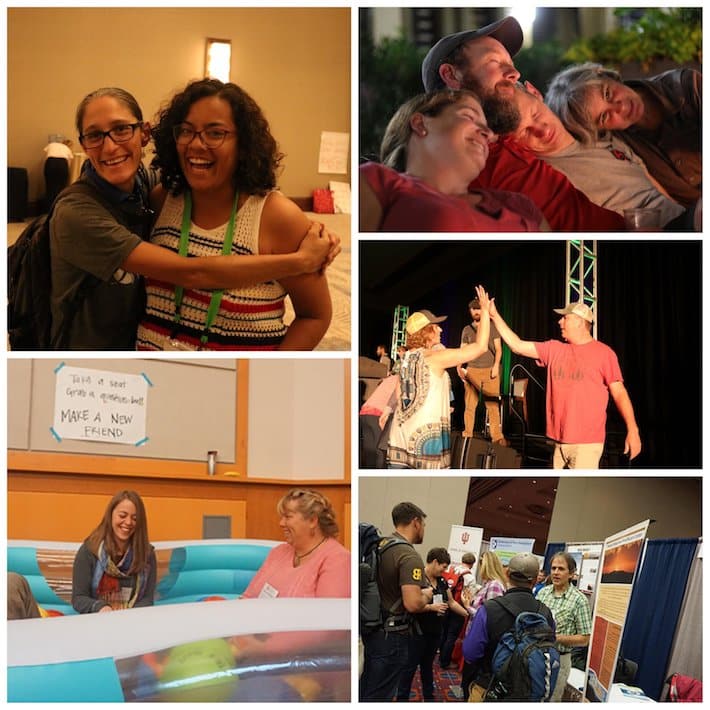
(Image courtesy Association for Experiential Education)
The outdoor season ends, and many of us return home or follow the seasons to continue this work. In many instances, we pass up the opportunity to learn what’s new in the industry.
The solution? Look for outdoor industry conferences, trade shows, and summits you can attend. Traditionally, conferences are those large, more formal events that feature industry speakers, time in lecture halls and breakout rooms, and good dose of PowerPoint presentations. At the larger such gatherings, there’s usually a convention exhibit hall featuring industry vendors.
Summits, especially in the outdoor industry, on the other hand have a looser feel, with industry pioneers and luminaries speaking and offering demos, opportunities to meet with fellow outdoor pros during hands-on adventure-based activities, and the chance to participate in both formally led and informally organized discussions and salons. Summits often incorporate more interplay, with the opportunity to socialize with industry pros, designers and leaders taking precedence over formal education.
Below, we’ve listed some upcoming outdoor industry gatherings for those times when you’ve stepped off the trail and find yourself with some time to delve into what makes our industry tick. These outdoor industry summits, conferences, and trade shows are an excellent opportunity to (more…)
Reducing Backcountry Risk Requires Planning and Assessment
Risk ManagementHere’s an outdoor educator’s nightmare: You’re walking through the woods and you spot a bunch of teens climbing barefoot on a rocky cliff leading to water. Other inexperienced campers clumsily tend a campfire that is about to get out of control. Still others in this group stand waist-deep in a river, oblivious to the fast-moving water just feet away, or the possibility of divers above them.
You look around and there doesn’t appear to be any adults, instructors or guides at this nightmarish campsite. What’s wrong with this picture?
First off, if you’re a professional outdoor educator or backcountry guide, you’re probably tempted to walk in amongst this mayhem and ask these youngsters what group they’re with and then ask them what it is they think they’re doing?
The Practice of Risk Management
Here at The National Center for Outdoor & Adventure Education (NCOAE), we take risk and site management seriously. To us, it’s far more than just a (more…)
Outdoor Education News Roundup
Outdoor Education News The Outdoor Education industry is abuzz with news this time of the year. What with school almost back in session and the industry’s largest and most influential conferences coming up in just a few months, its no wonder there’s so much outdoor education news to catch up on.
In no particular order:
There’s a new trade magazine just for the college and university outdoor education industry. The inaugural issue of Outdoor Insider — published by The Association of Outdoor Recreation and Education (AORE) — is now available online without a subscription.
The 2nd edition of Administrative Practices of AEE Accredited Programs is now on sale for just $3.00. Published by the Association for Experiential Education (AEE), this book is an invaluable resource for any outdoor education program administrator. And at just $3.00, buying it now is a no brainer.
AEE is now accepting workshop proposals for its Symposium on Experiential Education in the Digital Age, which takes place in Boston, Mass. from May 2-3, 2015.
The latest issue (September 2014) of the Journal of Experiential Education is now available. Articles include:
- Effects of a Developmental Adventure on the Self-Esteem of College Students (This study examines the effects of outdoor developmental adventure programming (ODA) on college students’ self-esteem. Although some previous studies have shown that outdoor adventure programming has positive effects on self-esteem, others did not find any effect. A quasi-experimental study was conducted over 5 months, which included two pretests and two posttests to address some limitations of previous studies.)
- The Social Climate and Peer Interaction on Outdoor Courses (This two-study report investigates achievement goal theory in the social domain to gain greater understanding of how the social climate of outdoor courses relates to peer interactions.)
- Building a Community of Young Leaders: Experiential Learning in Jewish Social Justice (This study assesses whether more frequent participation in Jewish activist learning events is associated with higher levels of engagement in social justice-related activities and conceptions of Jewish identity. The study design was cross-sectional and comparative.)
- Case Study — Behavior Change After Adventure Education Courses: Do Work Colleagues Notice? (In this case study, a mixed-method approach is used to examine the extent and type of changes in workplace attitudes and behavior, as self-reported by soldiers who had participated in 6- to 10-day “Experiential Leadership Development Activities” (ELDAs) delivered by the New Zealand Army Leadership Centre.)
- Appreciative Inquiry and Autonomy-Supportive Classes in Business Education: A Semilongitudinal Study of AI in the Classroom (In this article, the authors describe 10 separate classroom experiences where an appreciative inquiry (AI) exercise was used for course creation. Post-exercise surveys of students showed that the AI exercise was perceived to be a successful practice.)
- Book Review: Adventures in Social Theory: An Introductory Guidebook
The Association for Experiential Education’s 42nd Annual International Conference is fast approaching. This year’s gathering of outdoor and adventure-based educators, academic and students takes place in Chattanooga, Tenn., Oct. 23-26.
The Association of Outdoor Recreation and Education is getting ready to host its (more…)
TALK TO US
Have any further questions about our courses, what you’ll learn, or what else to expect? Contact us, we’re here to help!