

Treating Infections in the Backcountry: Get a Handle on it or Get Out
Wilderness MedicineA tiny cut on your leg may seem inconsequential at home, but three days into a wilderness trip, it can make you feel like the central character in a backcountry horror story.
The skin around the wound grows red, hot, and swollen, and what started as a little soreness becomes a throbbing pain. Eventually, the wound begins to ooze, and the redness spreads farther up your leg. Then come the chills, sweating, weakness, and fever, along with a racing heart. You’re also breathing faster than usual, and instead of feeling better after a night’s rest, you wake up aching and exhausted.
If the infection continues to spread, things can get even scarier. You may become unusually lethargic or confused, have difficulty breathing, or develop signs of shock. These symptoms can signal a potentially life-threatening systemic infection that requires immediate medical attention. And when you’re deep in the backcountry, the nearest emergency room may be hours, or even days, away.
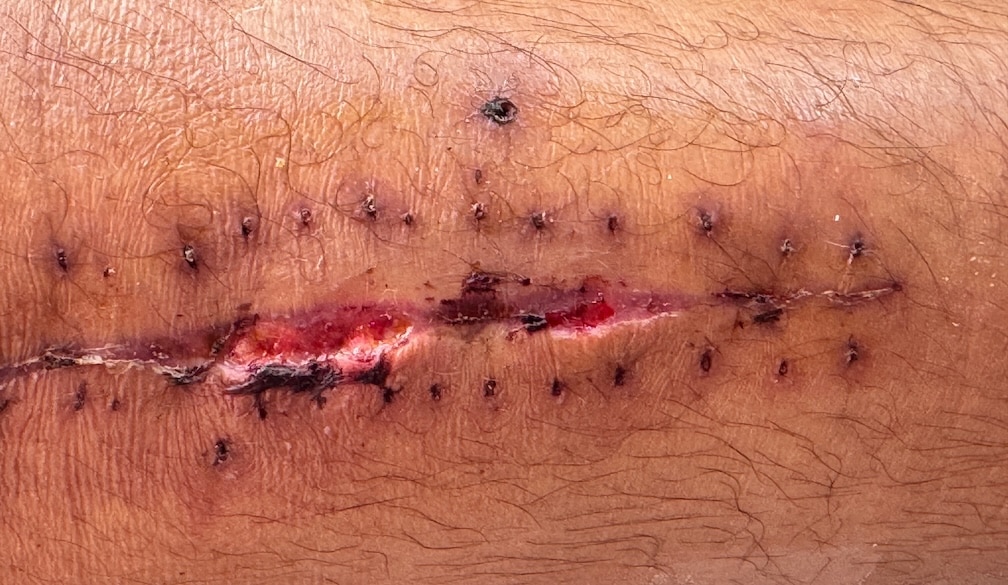
The dangers of an infected wound in the wilderness aren’t merely hypothetical. Consider the experience of a veteran river guide leading a weeks-long expedition through the Grand Canyon. After slipping on a raft, Brad Dimock, a now Hall of Fame river guide, suffered a four-inch gash to his shin that extended all the way to the bone. Two physicians who were traveling with the group he was guiding, cleaned the area and stitched the wound closed, and the expedition continued.
But several days later, the wound became infected. Despite antibiotics and subsequent efforts to reopen, drain, and irrigate the wound, the infection continued to worsen. Eight days after the injury, Dimock himself arranged an evacuation. He ultimately required hospitalization, intravenous antibiotics, surgical debridement (removal of infected and damaged tissue), and wound-vacuum therapy before making a full recovery.
Dimock’s experience illustrates one of the inherent challenges of wilderness medicine; namely, that an injury that might be manageable with prompt access to medical care can become far more serious when definitive treatment is not immediately available.
Situations like Dimock’s can’t always be avoided, but you can improve your odds and achieve better outcomes by (more…)
TALK TO US
Have any further questions about our courses, what you’ll learn, or what else to expect? Contact us, we’re here to help!