

Treating Infections in the Backcountry: Get a Handle on it or Get Out
October 21, 2026
A tiny cut on your leg may seem inconsequential at home, but three days into a wilderness trip, it can make you feel like the central character in a backcountry horror story.
The skin around the wound grows red, hot, and swollen, and what started as a little soreness becomes a throbbing pain. Eventually, the wound begins to ooze, and the redness spreads farther up your leg. Then come the chills, sweating, weakness, and fever, along with a racing heart. You’re also breathing faster than usual, and instead of feeling better after a night’s rest, you wake up aching and exhausted.
If the infection continues to spread, things can get even scarier. You may become unusually lethargic or confused, have difficulty breathing, or develop signs of shock. These symptoms can signal a potentially life-threatening systemic infection that requires immediate medical attention. And when you’re deep in the backcountry, the nearest emergency room may be hours, or even days, away.
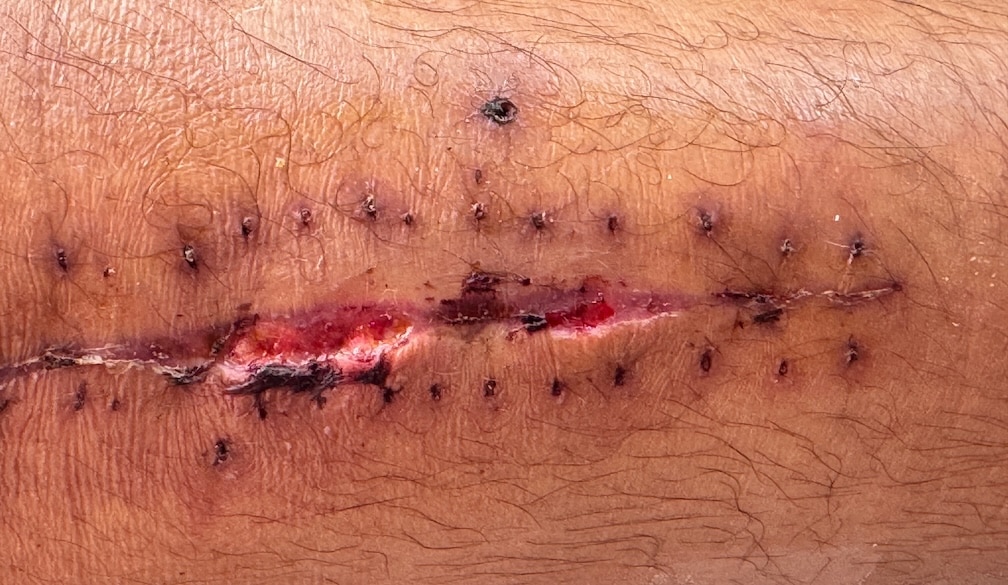
The dangers of an infected wound in the wilderness aren’t merely hypothetical. Consider the experience of a veteran river guide leading a weeks-long expedition through the Grand Canyon. After slipping on a raft, Brad Dimock, a now Hall of Fame river guide, suffered a four-inch gash to his shin that extended all the way to the bone. Two physicians who were traveling with the group he was guiding, cleaned the area and stitched the wound closed, and the expedition continued.
But several days later, the wound became infected. Despite antibiotics and subsequent efforts to reopen, drain, and irrigate the wound, the infection continued to worsen. Eight days after the injury, Dimock himself arranged an evacuation. He ultimately required hospitalization, intravenous antibiotics, surgical debridement (removal of infected and damaged tissue), and wound-vacuum therapy before making a full recovery.
Dimock’s experience illustrates one of the inherent challenges of wilderness medicine; namely, that an injury that might be manageable with prompt access to medical care can become far more serious when definitive treatment is not immediately available.
Situations like Dimock’s can’t always be avoided, but you can improve your odds and achieve better outcomes by knowing how to prevent infection, recognizing the signs of infection early, knowing how to treat various infections, and knowing when to evacuate. In this post, I bring you up to speed on the basics.
Infection Starts with Exposure
As students our wilderness medicine courses and EMT training courses learn, an infection develops when microorganisms (bacteria, viruses, fungi, or parasites) enter the body, establish themselves, and begin to multiply. In some cases, it occurs when otherwise harmless microorganisms that reside naturally in the body, begin to overpopulate.
Fortunately, exposure doesn’t necessarily mean infection. Whether someone becomes ill depends on the organism involved, how it enters the body, the person’s health, and how effectively the immune system fights it off.
In the wilderness, microorganisms can arrive by many routes, including:
- Contaminated food or water
- Cuts, punctures, abrasions, and other wounds
- Insect bites and stings
- Animal bites and scratches
- Contaminated soil
- Respiratory droplets from other people
That last one is easy to overlook. Tents, shelters, vehicles, and group camps can put people in close quarters, and participants can bring respiratory infections into the backcountry with them.
Inflammation Isn’t Always Infection
One important distinction for wilderness travelers and medical providers is the difference between inflammation and infection.
Inflammation is the body’s normal response to tissue damage, irritation, or infection. An injured ankle, abrasion, or cut may become red, swollen, warm, and painful without necessarily being infected. Infection occurs only when microorganisms or parasites get involved.
Spotting Common Symptoms of Infection
Signs that should raise suspicion of infection include:
- Increasing pain or tenderness
- Expanding redness, warmth, or swelling
- Drainage from a wound
- Fever or an abnormally low body temperature
- Chills, sweating, weakness, or unusual fatigue
- Rapid heart rate or breathing
No single finding proves that an infection is present. Some people, particularly older adults and those with weakened immune systems, may develop serious infections without a significant fever.
The challenge is recognizing when those symptoms are worsening rather than improving.
That’s why trends matter in wilderness medicine. Is the redness spreading? Is pain getting worse instead of better? Is the patient becoming weaker, confused, or increasingly ill?
Treat the Patient and the Environment
Managing an infection in the wilderness also requires you to manage the conditions surrounding the patient. Heat, cold, dehydration, exhaustion, inadequate nutrition, sleep deprivation, and prolonged stress place additional demands on the body. They may also make assessment and recovery more difficult.
A useful wilderness principle is to consider how many stressors are accumulating. Everyone has limits on how hot, cold, hungry, thirsty, wet, tired, and scared they can become. As those stresses pile up, the patient’s ability to cope with another problem may decline.
Whenever possible, correct what you can: Provide appropriate fluids and nutrition, keep the patient warm and dry, reduce unnecessary exertion, and allow time for rest.
Wounds Deserve Special Attention
Cuts, punctures, abrasions, and bites provide microorganisms with a route past the skin, which is one of the body’s most important defenses.
For a wilderness wound:
- Control bleeding.
- Irrigate the wound with appropriate clean water or sterile saline when available.
- Remove obvious contamination when it can be done safely and within your level of training.
- Protect the wound with an appropriate dressing.
- Reassess it regularly for increasing redness, warmth, swelling, pain, or drainage.
Deep punctures, animal bites, heavily contaminated wounds, wounds involving exposed bone or other important underlying structures, and wounds that continue to worsen require medical evaluation.
This is where distance from definitive care should influence decision-making. Whie you may think the question is, How bad is this wound right now? It’s also, How bad could this become before we can get this person to appropriate care?
When the Infection Is in Your Gut
Not all wilderness infections announce themselves with red, swollen skin. Some make their presence known through nausea, abdominal cramps, vomiting, and diarrhea — sometimes when you’re miles from the nearest trailhead.
Contaminated food and water can transmit bacteria, viruses, and parasites, including Giardia. Although the underlying infection is important, the most immediate concern in the backcountry is often what the illness is doing to the patient. Repeated diarrhea and vomiting can cause significant fluid loss, and dehydration can become a serious problem when replacement fluids are limited or the patient is already dealing with heat, exertion, or other environmental stresses.
Focus on Fluids
For a patient who can drink and keep fluids down, maintaining hydration should be a priority. Encourage frequent fluids as tolerated, using appropriately treated water. An oral rehydration solution containing the right balance of water, salts, and carbohydrates can be particularly useful when substantial fluid has been lost through diarrhea or vomiting.
Don’t focus only on how many times the patient has vomited or had diarrhea. Look at the whole patient. Is the person alert? Able to drink? Urinating normally? Becoming increasingly weak or dizzy? Can the patient continue traveling safely, or is the illness getting worse?
Know When It’s Time to Get Out
A mild gastrointestinal illness may be manageable in the field with rest, hydration, careful hygiene, and regular reassessment. A worsening illness is another matter.
Consider evacuation or medical consultation when the patient cannot maintain adequate hydration, repeatedly vomits fluids, becomes increasingly weak or lethargic, develops altered mental status, or shows other signs of significant deterioration. Severe abdominal pain, blood in the stool or vomit, or a serious or persistent illness also warrant medical evaluation.
And remember that gastrointestinal infections can spread quickly through a group. Careful hand hygiene, safe disposal of human waste, proper food handling, and avoiding contamination of shared food and water supplies can help keep one sick expedition member from becoming five.
Don’t Forget Food, Water, Bugs, and Animals
Not all wilderness infections begin with a wound. Contaminated food and water can transmit organisms that cause diarrhea, abdominal cramping, nausea, and dehydration. Natural water sources, including seemingly pristine mountain streams, shouldn’t automatically be considered safe. Appropriate water treatment, hand-washing, and careful food handling remain fundamental prevention measures.
Ticks and mosquitoes can transmit diseases including Lyme disease, Rocky Mountain spotted fever, and West Nile virus, depending on location and season. Protective clothing, repellents, regular tick checks, and prompt removal of attached ticks can reduce infection risk.
Animal encounters introduce another concern. Bites and scratches can lead to infection and may also raise questions about tetanus or rabies exposure, both of which require medical evaluation rather than prolonged improvisation in the field.
Know the Red Flags
Most important, recognize when you’re no longer dealing with a problem that should be managed in the backcountry. A severe infection can progress to sepsis, which is a life-threatening condition in which the body’s response to infection results in organ dysfunction.
Red flags include:
- Altered mental status or confusion
- Respiratory distress
- Signs of shock or poor perfusion (reduced blood circulation, which may be evidenced by pale, cool, or clammy skin; weakness or dizziness; altered mental status; or a rapid, weak pulse)
- Rapidly spreading redness
- Severe or rapidly increasing pain
- Significant fever accompanied by worsening illness
- Progressive weakness or lethargy
- Overall clinical deterioration
These findings should push evacuation and medical consultation higher on the priority list.
Reassess, Reassess, Reassess
Perhaps the biggest differences between wilderness medicine and conventional emergency care are time and resources. An emergency care facility can draw blood, obtain cultures, administer medications, order imaging, and bring in specialists. In the backcountry, you may have a first-aid kit, a satellite phone, limited supplies, and a long walk out.
That makes repeated assessment one of your most valuable tools. Monitor vital signs when appropriate, along with mental status, hydration, wound appearance, pain, and the patient’s overall condition. Documenting changes can help you recognize deterioration that might otherwise be difficult to notice gradually.
The objective is to prevent infection when possible, recognize developing illness early, provide appropriate care within your training and scope of practice, and arrange evacuation before a manageable problem becomes an emergency. Sometimes the most important treatment decision you make is deciding when it’s time to get out.
– – – – – – – – –
About The Author: David Young, EMT, is the Director of Emergency Medicine Education at The National Center for Outdoor & Adventure Education (NCOAE) in Wilmington, North Carolina.
Disclaimer: The information in this National Center for Outdoor & Adventure Education (NCOAE) blog post about managing infections in backcountry settings is provided for general informational purposes only and may not reflect current risk management or medical thinking or practices. No information contained in this post should be construed as risk management or medical advice from the staff at NCOAE. No reader of this post should act or refrain from acting on the basis of any information included in, or accessible through this post without seeking the appropriate medical advice on the particular facts and circumstances at issue from a licensed medical professional in the reader’s state, country or other appropriate licensing jurisdiction.
TALK TO US
Have any further questions about our courses, what you’ll learn, or what else to expect? Contact us, we’re here to help!
Leave a comment