

Are Kids Just Tiny Adults? Pediatric Variations in Medical Assessment and Treatment
EMT TrainingMost healthcare professionals, including some pediatricians, would rather treat adults than children. That should come as no surprise. If you’ve ever had to draw blood from a young child, you know how heartbreaking it can be for everyone in the room. Maybe in the building. Those screams can be dramatic!
The emotional pain we feel as practitioners, let alone parents, can be as equivalent to the physical pain the child experiences. It adds new meaning to the expression, “This is going to hurt me more than you.”
Unfortunately, the desire to avoid such emotional pain, along with other challenges, often discourages even the most knowledgeable and skilled doctors, nurses, emergency medical technicians (EMTs), and other healthcare providers from assessing and treating children. In some ways, they’re just little adults. In other ways, they’re not. And what we don’t know about their similarities and differences compared to adult patients can hurt them. That is particularly true when it causes us to withhold medical care when that care is most needed.
To some degree, we often fear what we don’t fully understand, and in some ways, we have been conditioned to fear those differences. In a lot of medical education, this fear is often instilled by (more…)
The Star of Life: Its Origin, Meaning, and Function
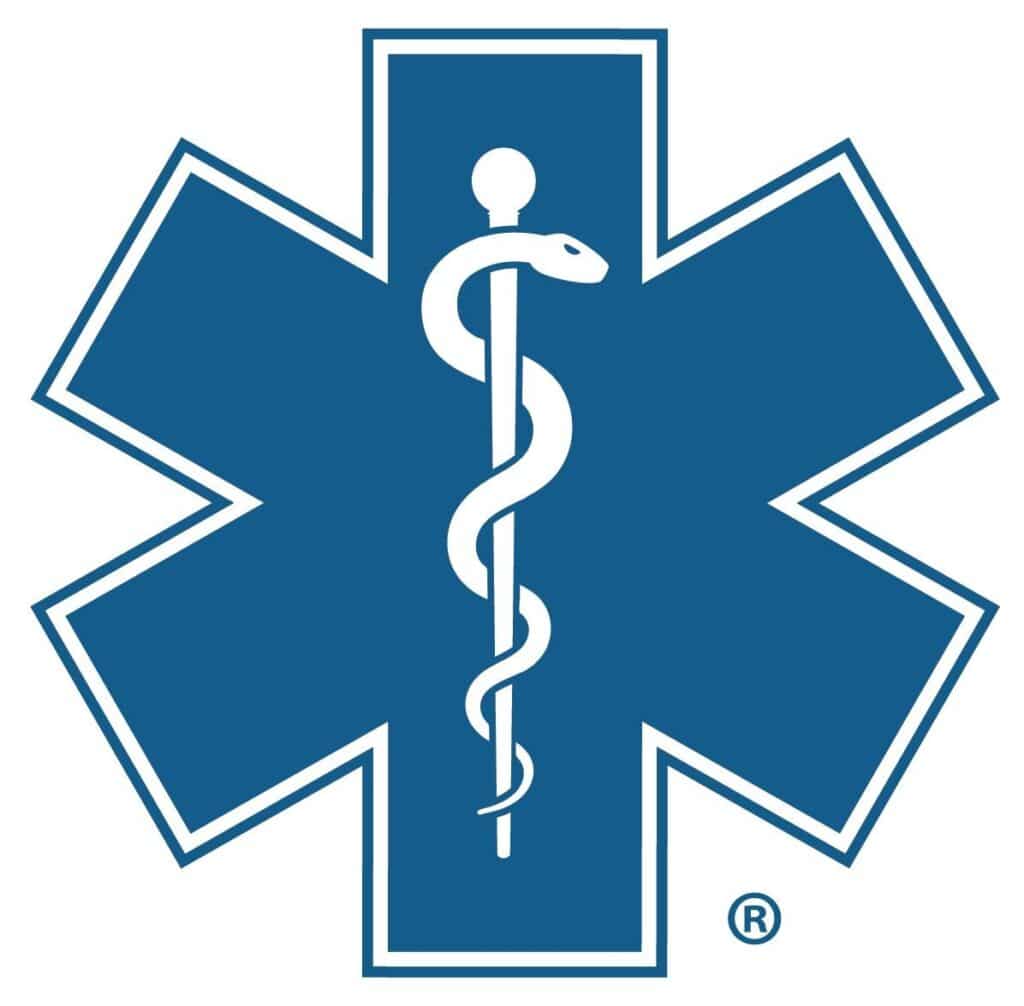
Emergency MedicineYou’ve no doubt seen the symbol below painted on the side of an ambulance, embroidered on the uniforms of emergency medical technicians (EMTs), or stuck to emergency medical equipment. Maybe you even wondered whether it had any meaning. What’s with the snake coiled around the staff? What’s the significance of the six-pointed star?
The Origin of the Star of Life
Emergency Medical Services (EMS) was formed in the United States in the late 1960s around the realization that survival rates were higher on overseas battlefields than on U.S. highways. The high mortality rate on our highways was due, in part, to the lack of an organized system for responding to accidents and treating injured parties.
As emergency medical services were becoming standardized in the United States, the National Highway Traffic Safety Administration designed and later trademarked the blue, six-pointed Star of Life to serve as the official symbol identifying EMS personnel, vehicles, and equipment. The symbol was introduced largely because the Red Cross emblem is (more…)
Spinal Immobilization or Spinal Motion Restriction: Which is Safest?
Emergency MedicineFor decades, spinal immobilization (SI) has been the standard practice when moving trauma patients with potential spinal injuries. Indeed, this particular procedure has long been commonplace for patients injured in the backcountry. Spinal immobilization involves the use of various devices, including a long spine board (LSB) and a cervical collar to stabilize the spine and prevent further injury.
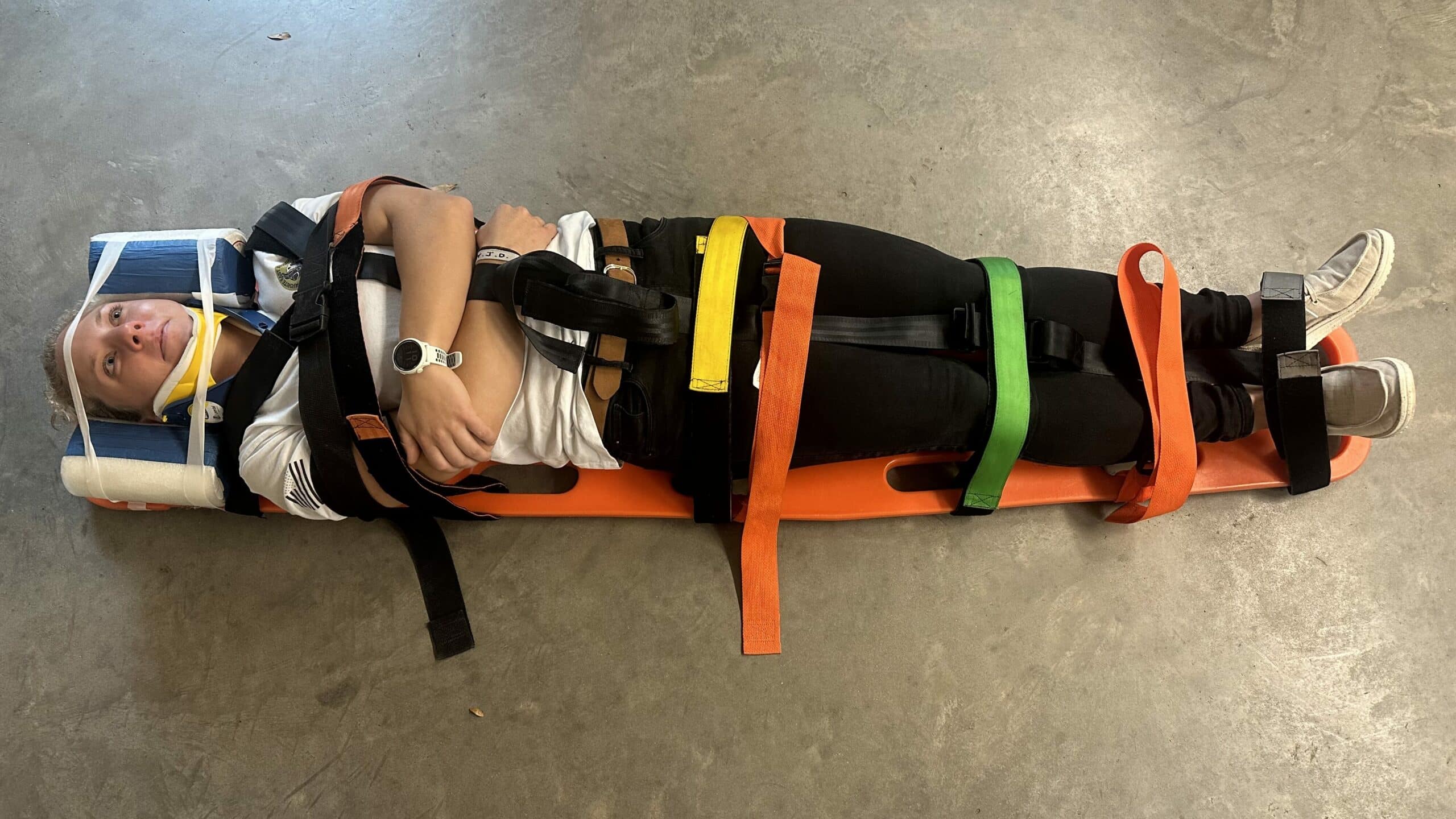
However, recent research has called this practice into question. In fact, while current techniques limit or reduce undesired motion of the spine, they do not succeed in fully immobilizing the spine. For this reason, the term “spinal motion restriction (SMR)” has gained favor over “spinal immobilization.”
Both terms refer to the same concept — minimizing unwanted movement of the potentially injured spine. However, while LSBs have historically been used to attempt spinal immobilization, SMR may be achieved using a scoop stretcher, vacuum splint, ambulance cot, or other similar device to which a patient is safely secured.
The National Registry of Emergency Medical Technicians (NREMT) defines the term “spinal immobilization” as the use of adjuncts (LSB, cervical collar, etc.) to prevent movement of the spine. The term “spinal motion restriction” is defined more broadly as attempting to maintain the spine in anatomic alignment and minimizing gross movement — irrespective of adjuncts.
Evaluating the Efficacy of Spinal Immobilization
The effectiveness of the LSB to prevent further trauma to the spine has never been proven in high-level trials. Its use was adopted largely by consensus and not driven by data from any formal studies. An extensive literature review on the history of not using the LSB as a tool concluded that it is ineffective and may be detrimental by delaying time-sensitive treatments for some patients.
A study published by Cambridge University Press examined patient outcomes over a decade during which Emergency Medical Service (EMS) systems decreased backboard use as they transitioned from SI to SMR protocols. The study included (more…)
Maintaining Resilience and Mental Health in the EMS Profession
Emergency MedicineThe suicide rate among emergency medical service (EMS) professionals rose a shocking 38 percent since 2009, according to a study published in the Western Journal of Emergency Medicine. But as shocking as that statistic is, it should come as no surprise.
As an emergency medical technician (EMT) or paramedic, you typically work a five-day rotation of 12-hour shifts (days or nights). You may start the week working Monday and Tuesday and then have Wednesday and Thursday off. You spend half your first day off catching up on sleep, doing chores, and running errands. You’re free the next day, but pretty much alone because everyone you know is at work or school or busy with other normal weekday obligations.
As a result, you likely lack the social connections many of us rely on for emotional support and psychological well-being. Come Friday, Saturday, and Sunday — when your friends and family are off work — you’re back on the job, providing critical medical care in highly stressful situations involving people who don’t always treat you with the respect and appreciation you deserve. And you have to perform this service with a smile on your face, because you don’t want a complaint on your record.
To make matters worse, emergency medical care leaves no room for mistakes. Quality assurance (QA) and quality improvement (QI) programs ensure that Monday morning quarterbacks are always looking over your shoulder to spot mistakes and offer their criticism and sage advice from their comfortable seats along the sidelines.
It’s Getting Worse Instead of Better
Thanks to high healthcare costs and doctor shortages, many people don’t have access to (more…)
New Thinking about How to Handle Spinal Injuries in Remote Wilderness Settings
Wilderness Medicine TrainingBest practices for evaluating and transporting patients with potential spinal fractures or spinal cord injuries is a hot topic in emergency medicine. And it’s no wonder. All of us who work in the adventure programming and emergency medical services field fervently want to avoid causing or worsening a potentially catastrophic injury to someone’s spinal cord.
As such, and for many decades, EMS officials dogmatically insisted that “immobilizing” patients with potential spine injuries was the best protection from further harm. Protocol demanded rigid backboards, cervical collars, head blocks, and yards of tape and straps to prevent someone who is injured from moving. However, new research suggests this is not only ineffective, but quite likely harmful.
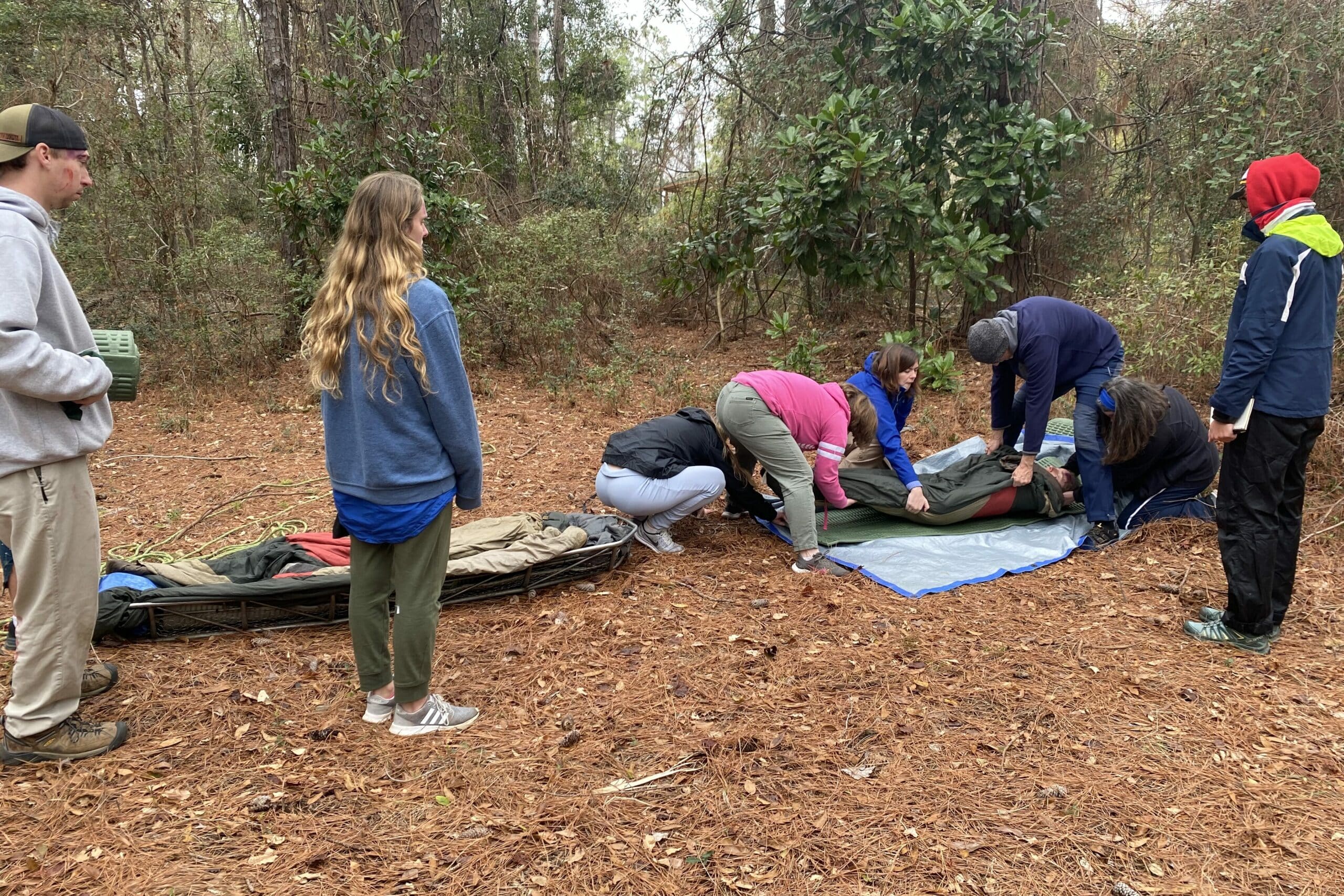
Immobilization Dismissed as the Tool of Choice for Patient Transport
Anyone suffering a spinal injury could have a spinal fracture. And that fracture could be unstable. So, if your client (i.e., patient in this case) moved even a little bit (like turning their head), that unstable spinal fracture could slide around and cause spinal cord injury. And that spinal cord injury could cause them to be paralyzed forever.
The Old School solution was to prevent them from moving on their own. Only let trained first responders (including outdoor educators, field instructors, and guides who are certified in wilderness medicine) lift/move the injured patient. Immobilize them to a rigid device — essentially a full-body splint — and get them out of the backcountry and to a hospital.
Upon what was this edict based? Essentially nothing. A few case reports that, on closer scrutiny, don’t indicate any (more…)
Most EMS Terminology Comes Down to Initials, Abbreviations and Acronyms
EMT TrainingA few years ago, we ran a three-part series on slogans, slang, and terminology as it applies to a trio of human-powered outdoor recreational activities. If you recall, we started out with some “gnarly” surfing terms, then we “tied in” to a conversation about climbing, finally pulling a “wet exit” on the language of paddling.
You can review these three articles using the links below:
- From Sept. 20, 2020: Surfing Terminology and Slang: You Can’t Play BINGO Without the Lingo
- From Oct. 10, 2020: On Belay — Climbing Terminology and Slang
- From Oct. 30, 2020: Paddling Terminology and Slang: Nobody Says ‘Up a River Without an Oar’
There was quite a bit of word whimsy in those articles, and we made sure to remind readers that successfully lassoing the linguistics of a particular activity was no guarantee you were mastering that particular sport professionally.
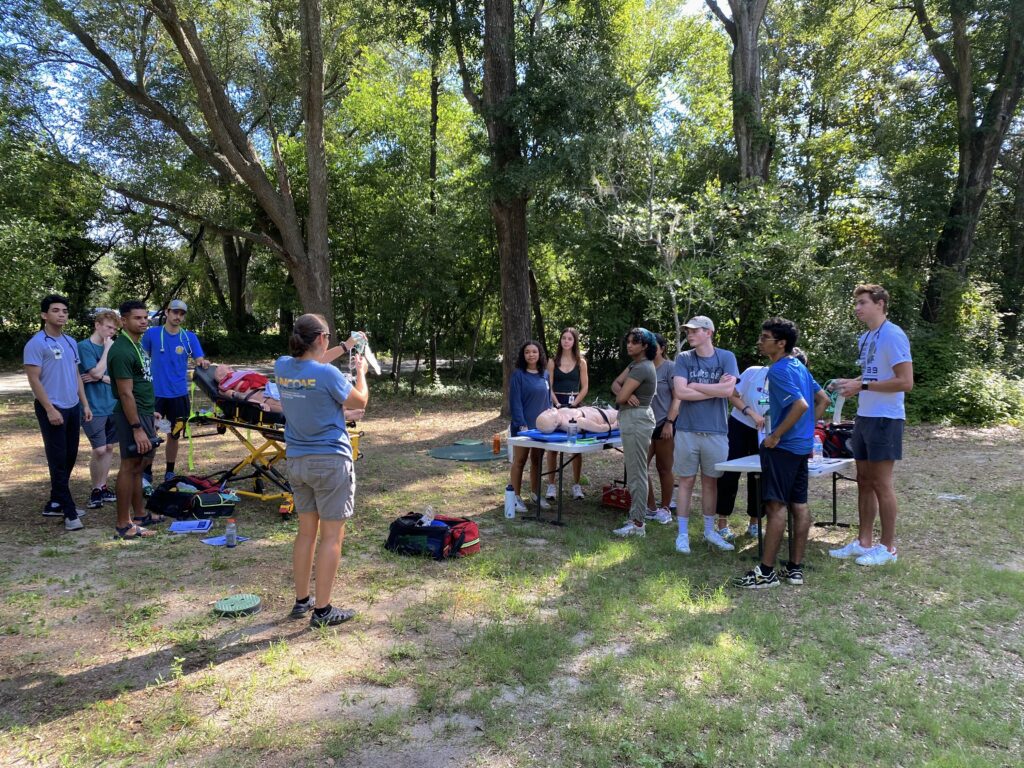
Today we’re taking a more serious look at language, this time highlighting the terminology used by members of the Emergency Medical Service (EMS) community. That’s because one of our areas of focus here at The National Center for Outdoor & Adventure Education (NCOAE) is emergency medicine training and education. And whether you’re an EMS, medical professional, or wilderness first responder (WFR), these terms are most often employed when these professionals find themselves managing a medical emergency.
First off, you might notice that most of these terms come in the form of acronyms, abbreviations, and initials, and the reason for that is to enable first responders to quickly communicate and react with each other and the patient in the field.
The source for these acronyms comes from the NCOAE Wilderness Medicine Field Guide (ISBN 978-0-578-87449-4).
Here, we present them in alphabetical order: (more…)
NCOAE’s EMT Training Opens the Doors to Jobs Across the U.S.
EMT TrainingApplicants to our nationally renowned EMT training courses often ask us if they can take
their new EMT credentials to the state where they live, and the answer is mostly yes.
The National Center for Outdoor and Adventure Education’s (NCOAE) campus is
located in North Carolina, where we offer 21-day “Intensive” EMT-Basic and 23-day
“Intensive” Advanced EMT training courses among others. Successful completion of
these courses authorize our graduates to take the National Registry of Emergency
Medical Technicians (NREMT) exam.
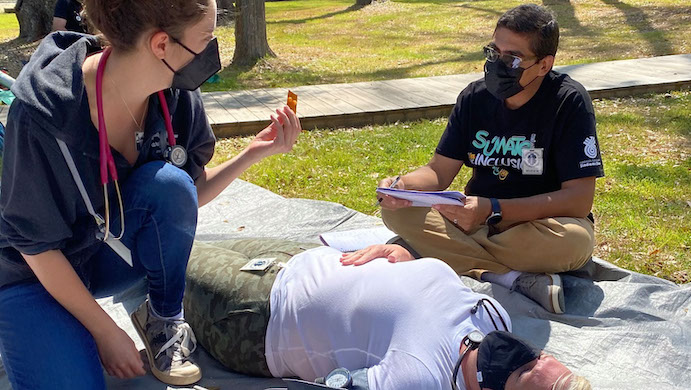
National Registry Certification examinations evaluate the competence of EMS
practitioners at a variety of levels, including Emergency Medical Responder (EMR),
Emergency Medical Technician (EMT), Advanced Emergency Medical Technician
(AEMT), and Paramedic.
NREMT credentials are either required for an initial license or accepted for legal
recognition or reciprocity in all 50 states and Puerto Rico. That makes it easier to
maintain
Meet the Student: Gordon Harrison III
Student ProfilesIf Gordon Harrison’s name sounds familiar to you, that likely means one of two things: You either know him personally or you’re a fan of the water sport known as wakeboarding.
David “Gordon” Harrison (the third) recently graduated from one of our 19-Day ‘Intensive’ EMT-Basic training courses. And as you probably figured out by now, this native of Caroline County, Va. (who now calls Melbourne Beach, Fla. his home), holds the distinction of being the only professional athlete to enroll in that course — or any course for that matter here at The National Center for Outdoor & Adventure Education.

Harrison started wakeboarding as a child and become good enough in high school to be invited by the World Wake Association to join the Jr. Pro Wakeboard Tour. Suffice to say, he’s never looked backward since.
For the uninitiated, wakeboarding is a water-based sport in which the athlete — standing on a short board with foot bindings known as a wakeboard— is towed behind a motorboat across its wake, allowing the athlete to crest the wake for aerial maneuvers. In Harrison’s case, he’s so proficient at wakeboarding that he’s only one of a handful of people on the planet capable of making a living as a professional wakeboarder.
So, what possesses someone living the life of a pro athlete to drop everything and spend 19 days with us in North Carolina preparing to sit to for the NREMT (National Registry of Emergency Medical Technicians) exam? That’s what we wanted to know. Here’s what Harrison had to say, in his own words: (more…)
TALK TO US
Have any further questions about our courses, what you’ll learn, or what else to expect? Contact us, we’re here to help!