

Administering Oxygen: What Every EMT Must Know
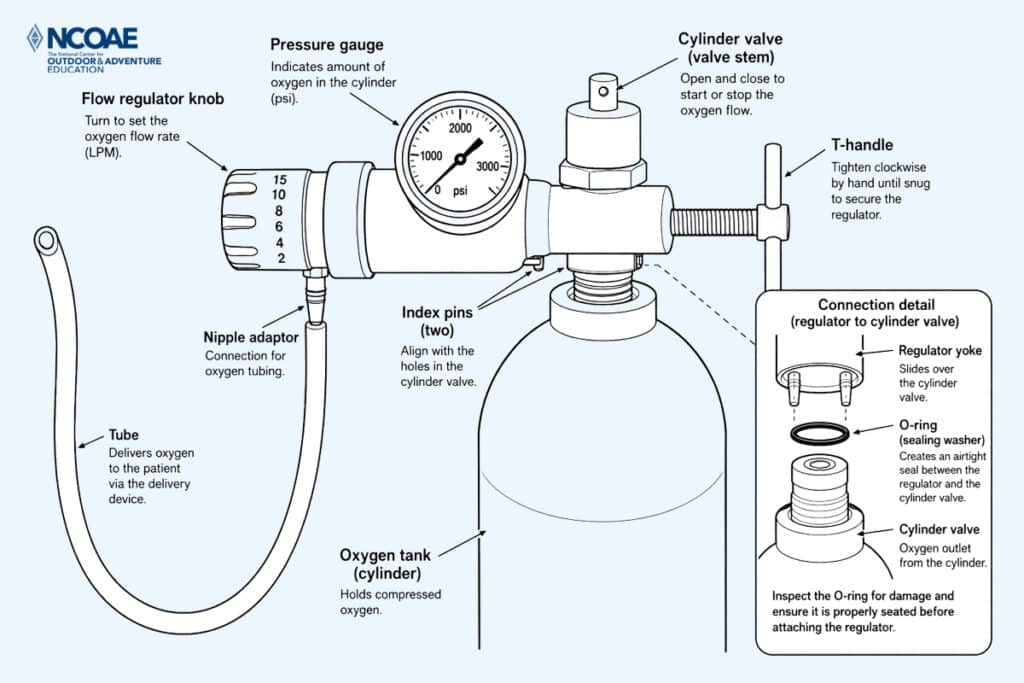
Emergency MedicineProperly operating an oxygen cylinder is among the first hands-on skills every EMT student learns in training. On the surface, it looks simple enough: Just attach the regulator, open the valve, and boom! You’re good to go.
But the apparent simplicity of the operation can be deceiving. For instance:
- A damaged O-ring can cause a leak.
- An unsecured cylinder can become a dangerous projectile.
- Failing to check tank pressure can leave you without oxygen just when your patient needs it most.
Whether you’re a medic in an ambulance or providing care in the backcountry, knowing how to safely set up and operate an oxygen cylinder is a foundational emergency medicine skill. This post brings you up to speed on the fundamentals of administering oxygen.
Oxygen Is Medication: While oxygen may be readily available, that doesn’t mean every patient needs it. It’s a medication that should be administered only when clinically indicated and according to current protocols and each patient’s needs. Before any of that can happen, however, you need to get the oxygen safely from the cylinder to the patient.
When Administering Oxygen, Safety Comes First
All of us learned in middle school science that oxygen makes fire burn faster, so whenever you’re working around concentrated oxygen, take the following precautions: (more…)
Safety Should Always Come First During a Wilderness Medicine Scene Size-up
Wilderness MedicineSafety first! That short phrase has been a mantra in outdoor adventure and education for as long as I can remember. In wilderness medicine, safety is also, and obviously, a top priority.
It’s counterintuitive, but the first person you need to protect is yourself, along with other members of your team. Rushing into a scene without first assessing potential hazards can quickly turn one victim into two or three or more.
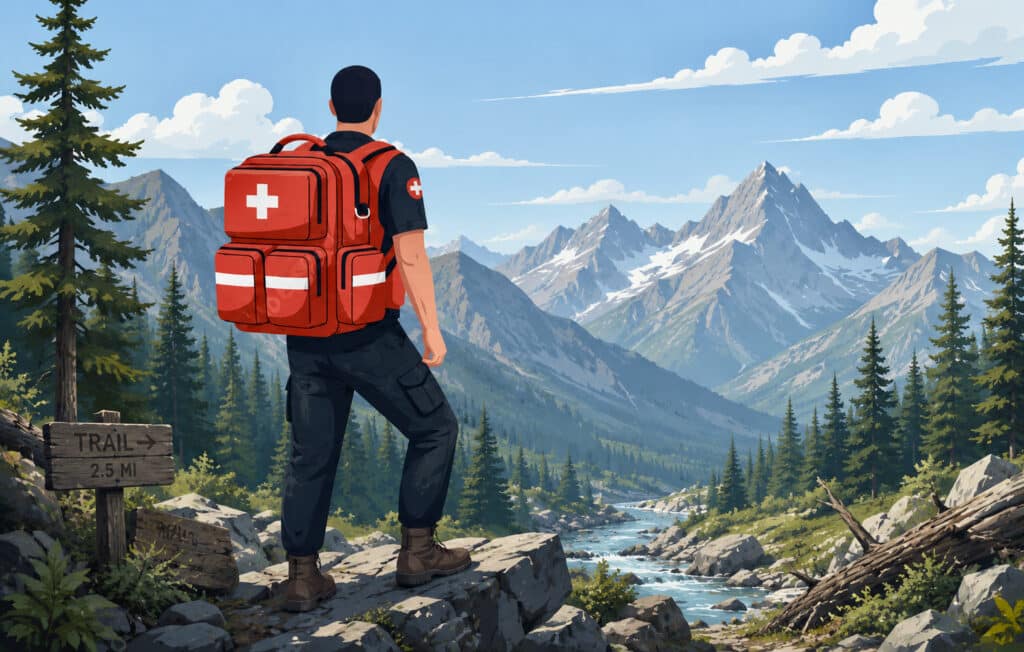
As part of our emergency medical service (EMS) training here at The National Center for Outdoor & Adventure Education (NCOAE), we are taught to perform a scene size-up before treating ill or injured parties in any situation. We check for hazards, try to determine the mechanism of injury (MOI) or nature of illness (NOI), count patients, and determine whether additional equipment or resources are needed. An example? Grabbing up a cervical collar and stretcher for spinal motion restriction (SMR).
See our previous post “The Role of Assessment in Wilderness Medicine” for additional details.
One component of the scene size-up that’s often overlooked is the safety check. We’re all taught to check a scene for safety, but few of us perform a thorough one. Even fewer perform a secondary safety check to verify that the scene is still safe after we (more…)
TALK TO US
Have any further questions about our courses, what you’ll learn, or what else to expect? Contact us, we’re here to help!