

Catching the Best While Dodging the Worst: Weather Monitoring for Outdoor Education and Adventure Programming
March 25, 2026
Maps cover the floor like carpet. I’m perched on the edge of a couch in the back room of a surf shop, watching the Weather Channel. I jot down timing, wind speed and direction, barometric pressure, tides, and air and water temps. Then I study the maps and place pebbles where I might score big winter swells.
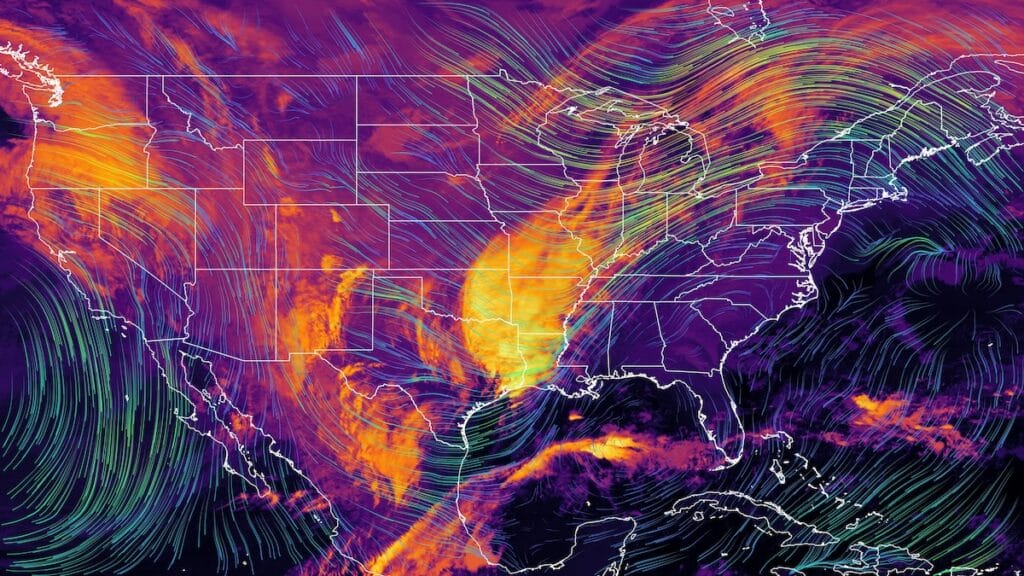
My objective is simple: maximize fun while reducing risk.
Thoughtful weather monitoring plays a central role in that. It helps identify, analyze, and reduce risks tied to changing conditions by combining real-time data, historical patterns, and forecast trends. For organizations like The National Center for Outdoor & Adventure Education (NCOAE), it supports preparation, protects operations, and, most importantly, keeps participants safe.
Over the years at NCOAE, I’ve thoughtfully pushed myself and others with similar skills right to the edge of our comfort zones. From that experience, I built a three-tier framework to assess and reduce weather-related risk. This post breaks it down.
The Three-Tier Framework
Before heading out, I run every trip through a simple framework that keeps my decisions grounded and intentional. It helps me stay focused on what matters most: making the most of the experience while staying prepared for what could go wrong.
Here’s the framework:
- Identify: Catalog the weather and climate factors that could shape or disrupt your trip.
- Educate: Build your understanding using past data, observations, and science.
- Mitigate: Use what you’ve learned to create a plan that reduces risk.
All three steps involve journaling, and the final step leads to a written plan. The process repeats itself, and each trip sharpens your judgment. Over time, your notes become one of your most valuable tools.
I keep separate journals by season, which makes it easier to find what I need.
Step 1: Identify
Start by choosing where you want to go, what conditions you’re likely to face, and the type of experience you want.
I tend to push harder when I’m solo. That means choosing the right season matters. Winter for big surf in Maine. Spring through early fall for bikepacking the Eastern Divide Trail.
Some people might call my process obsessive. I track conditions, sketch maps, and regularly make predictions. It works. By the time I’m done, everyone around me knows exactly what I’m getting into, and sometimes they’re coming along for the ride.
This first step in the framework also includes identifying risks, gathering reports, and collecting local data. Then I take it a step further. I quite literally picture myself in those conditions, from best case to worst case.
For example, winter surf in New England means water near freezing. I prepare for that mentally. I know I can handle it, and I enjoy the challenge.
Step 2: Educate
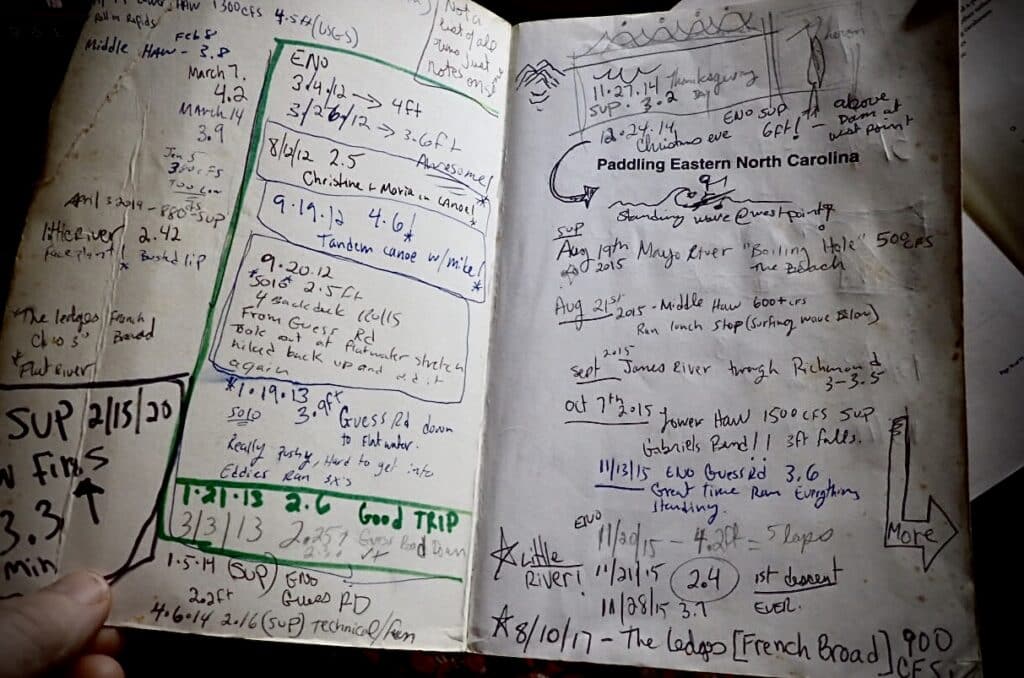
Past experience is one of our best teachers. I use data from previous trips to fine-tune timing, packing, and logistics. Here, I rely heavily on my journals because they give me real insight based on actual conditions, not guesses.
©2026 Stephen Mullaney | All rights reserved.
Whitewater stand-up paddleboarding is a great example. Inside my journal (see above), I keep notes on river levels, temperatures, conditions, and personal reflections on close calls or injuries.
Pro Tip: As you build your knowledge, go deeper than the forecast. Look at how recent weather affects avalanche risk, water quality, or terrain stability.
I also plan for what happens if things go wrong. What resources are available? Could my choices put others at risk? Am I prepared to handle a situation without pulling help away from someone else?
And I keep this simple NCOAE equation in mind: Self + Community + Action = Impact
Once you build the habit of tracking and learning, it sticks. Over time, your experience helps others make smarter decisions too.
Step 3: Mitigate
Mitigation means reducing risk, not eliminating it. The focus here is on lowering the chance, severity, and duration of problems, and being ready to respond if they happen. This is another area where your journals pay off. If you’re planning a winter trip, revisit past winter entries. Look for patterns and lessons you can apply now.
Make it Personal: Organize your notes in a way that works for you. Some people journal by season. Others by activity like hiking, climbing, or paddling.
For each trip, include a packing review:
- What you brought
- What you wish you had
- What you used
- What stayed in your pack
That level of detail sharpens your preparation every time, not to mention holds the possibility of lessoning the load the next time you’re out on an adventure.
Making the Call: Go or Bail?
After working through the framework, I decide whether to move forward. I ask myself:
- Do I have the information I need?
- Can I act on it in a way that keeps me safe, capable, and ready to grow?
If the answer is no or even maybe, I pause, reassess, or walk away.
Recommended Reading: For more about going or bailing, read my post “Safety in the Backcountry: Deciding When to Bail on a Trip or Adventure” here on the NCOAE Blog.
If I move forward, I continue to monitor conditions right up to the start, and even during the trip. My final check happens at the trailhead, base, or shoreline.
And I keep asking:
- Am I making a good call?
- Can I get out if things change?
- Who else is affected if I need help?
Turning back is always an option. So is asking for help or hiring a guide. I’ve been guiding for decades, and I still bring in local expertise when I need it.
Mitigation looks different for everyone. In unfamiliar terrain, the smartest move might be teaming up with locals or working with a guide.
Follow the process: identify, educate, mitigate. Then come back, learn from the experience, and get ready for the next one.
One more thing. Training is one of the strongest ways to reduce risk. At NCOAE, we offer wilderness education for individuals and groups. Visit ncoae.org or reach out ask about building a custom outdoor education course.
About the Author: Stephen Mullaney is the Director of School Partnerships and Staff Development at The National Center for Outdoor & Adventure Education (NCOAE).
TALK TO US
Have any further questions about our courses, what you’ll learn, or what else to expect? Contact us, we’re here to help!
Leave a comment