

Outdoor Recreation Participation Is at a Record High: Now Comes the Real Work
July 09, 2026
Last year, more people in the United States participated in outdoor recreation than ever before. And while that should energize anyone who believes in the power of outdoor experiences, it prompts those of us who work in outdoor education and adventure programming to pay close attention.
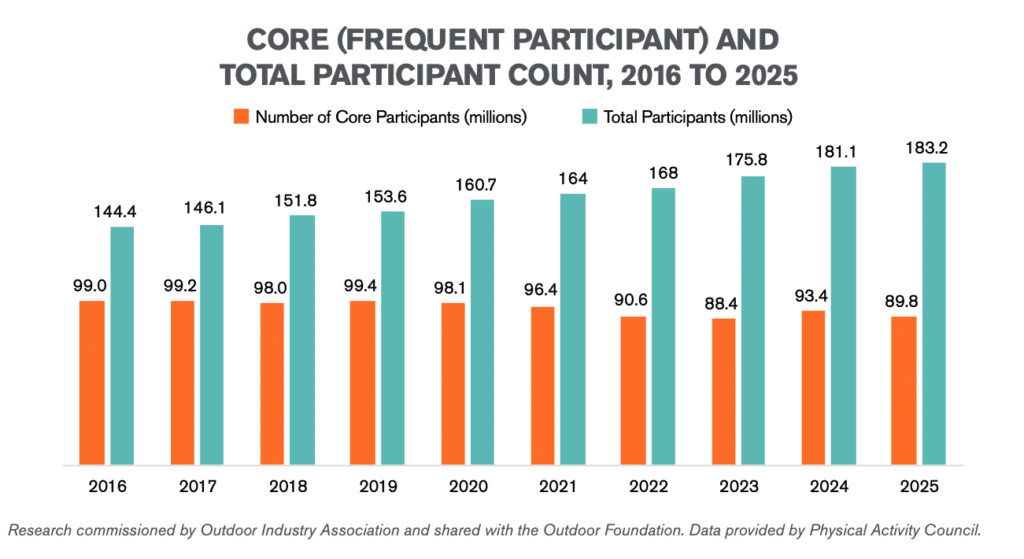
According to the 2026 Outdoor Participation Trends Report from Outdoor Industry Association (OIA) and the Outdoor Foundation, 183.2 million people ages 6 and older in the U.S. participated in outdoor recreation in 2025. That represents 59 percent of the population in that age group and marks the highest participation total ever recorded, according to OIA.
On the surface, that sounds like a straightforward win for human-powered outdoor recreation. More people hiking, camping, paddling, climbing, biking, exploring parks, and choosing time outdoors speaks to a growing desire for connection with the natural world.
However, the deeper story is asking far more of us.
The report also shows that outdoor participation has become more casual. Since 2019, the outdoor recreation participant base in the U.S. has grown by nearly 30 million people. Yet the average participant now engages in about five fewer outings per year than before the COVID-19 pandemic (March 2020 – May 2023). In other words, more people participate, but many do so less often.
For outdoor educators, parents, students, and community leaders, that gap shouldn’t be overlooked. Participation alone does not build lifelong outdoor confidence. Repeated experience, skill development, thoughtful instruction, and supportive community help turn a first step outside into a lasting outdoor life.
Outdoor Recreation Growth Points to a New Kind of Participant
The 2026 Outdoor Participation Trends Report confirms what many outdoor organizations, including The National Center for Outdoor & Adventure Education (NCOAE), have already felt: The outdoor community has expanded. New participants continue to enter the space, and the growth reaches across age, race, ethnicity, gender, income, and education.
For example, the report notes several areas of growth from 2024 to 2025. Participation among children ages 6 to 12 grew 5 percent to 22.6 million. Hispanic participation rose 6.5 percent. Women reached a record participation rate of 53.4 percent. Participants ages 65 and older added 800,000 people in a single year.
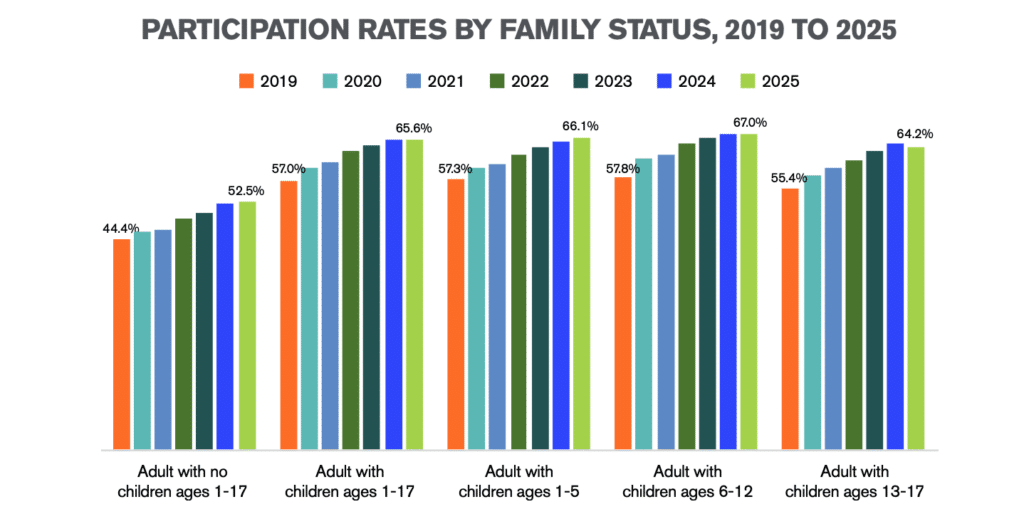
While this broadening of outdoor participation creates real opportunity, it also creates responsibility. Many newer participants may want to spend more time outdoors, but they may lack the skills, confidence, equipment knowledge, or community support to make outdoor activity a regular part of life.
That is where outdoor education plays a central role. Guided outdoor recreation and education experiences like those offered here at NCOAE help people move beyond occasional recreation. They learn how to prepare, how to travel responsibly, how to make sound decisions, and how to care for themselves and others in changing outdoor environments.
The Outdoor Recreation Frequency Gap Deserves Attention
The report describes a “frequency gap” in outdoor participation. Total participation grew, yet frequent participation declined. Core participants — the most frequent outdoor participants — dropped by 3.6 million in 2025 compared with 2024.
From our perspective, that doesn’t mean people have stopped caring about the outdoors. It just means many people may need better pathways to keep going. A casual participant might enjoy a day hike, a weekend camping trip, a first paddle, or a group stroll. A more committed participant develops repeatable skills and a sense of belonging outdoors. That shift often happens through practice, mentorship, and structured learning.
At The National Center for Outdoor & Adventure Education, this notion sits at the center of our work. NCOAE creates and facilitates outdoor and adventure education experiences that promote personal growth, professional development, and stewardship in communities and the natural environment.
That mission speaks directly to the frequency gap. People return to the outdoors when they feel prepared. They return when an experience helps them grow and when they understand how their actions connect to their community and the natural world.
Kids and Families Can Build Lifelong Outdoor Habits
One of the best signals in the report comes from youth participation. Children ages 6 to 12 showed notable growth, and about two-thirds of households with kids participate in outdoor activities. That matters to us here at NCOAE because we’ve always known that early outdoor experiences can shape long-term behavior. In fact, it’s precisely why we recently launched Camp L.E.A.D. — a weeklong summer day camp for 8–11-year-olds, with a “pro” version available for boys and girls ages 12-14.
A child who learns how to hike, camp, paddle, observe wildlife, or move through the outdoors with care gains a foundation for confidence, judgment, curiosity, and environmental stewardship.
Families play a major role in that foundation. When parents and other adults participate with children, the outdoors becomes part of family culture and a place for learning, conversation, challenge, and shared responsibility.
Outdoor education can support that process by giving young people guided experiences that meet them where they are. NCOAE’s asset-based programs help students build technical outdoor skills while practicing leadership, communication, decision-making, and environmental responsibility. Those skills help students understand how to contribute to a group, respond to challenge, and develop a deeper relationship with the natural world.
Young Adults Need Better Pathways Into Outdoor Education
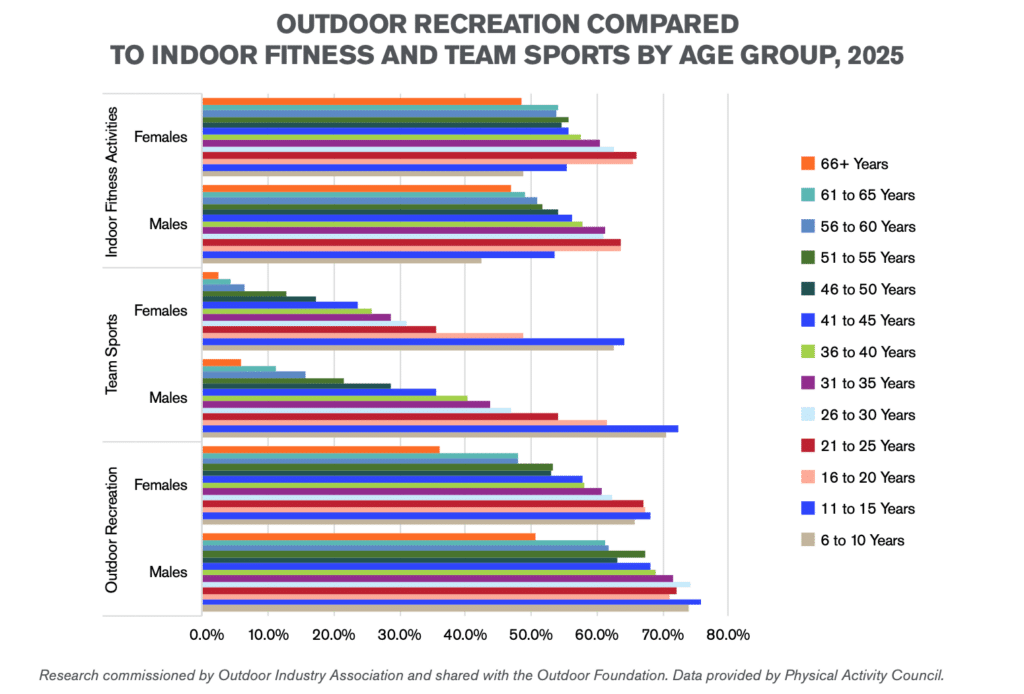
The 2026 Outdoor Participation Trends Report also raises a concern about young adults. The 18-to-24 and 25-to-34 age groups were the only age cohorts to decline in outdoor participation in 2025.
For colleges, employers, outdoor organizations, and families, this deserves attention. Young adulthood often brings major transitions: leaving home, entering college, starting work, changing communities, and making decisions about identity and direction. Outdoor experiences can provide structure and support during those transitions.
The right program can help young adults develop practical skills and stronger self-awareness. They can also help them explore career pathways connected to outdoor leadership, wilderness medicine, emergency response, conservation, education, and adventure programming.
Here at NCOAE, our gap semester, outdoor education and wilderness medicine programs give young adults a way to do more than participate. They can train, lead, reflect, and gain experience that connects personal growth with professional direction. A young adult who sees the outdoors as a place to learn and serve may return more often, choose more ambitious goals, and carry outdoor values into future work and community life.
Camping and Hiking Remain Strong Gateways to the Outdoors
The OIA’s report identifies hiking as the most popular outdoor activity, with 63.6 million participants in 2025. Camping reached 42.3 million participants, and more than 90 percent of campers also participate in other outdoor activities. That makes camping and hiking powerful entry points. It gives people an accessible way to begin, then open doors to deeper outdoor experiences such as backpacking, paddling, climbing, navigation, outdoor leadership, and training in the basics of wilderness medicine.
A first camping trip exposes you to so much. It can introduce trip planning, food systems, water treatment, shelter setup, group roles, risk awareness, and Leave No Trace practices. A hike can become a lesson in pacing, navigation, observation, weather awareness, and care for shared spaces.
When those experiences happen with the help of trained outdoor educators and field guides, the learning becomes more intentional. Young people begin to see outdoor recreation as a hobby, which compels them to build skills they can repeat and adapt.
Outdoor Education Turns Interest Into Confidence
The 2026 Outdoor Participation Trends Report gives the outdoor education field a clear message. Getting people outside starts the work. Helping them keep going has the potential to turn simple participation into a lifelong practice.
Record participation also shows that people want outdoor experiences. The frequency gap shows that many need support to make those experiences part of their lives. NCOAE exists for that work. Through student-centered, values-driven, and outcome-focused programs, we help teens and adults build technical skills, strengthen interpersonal relationships, develop civic awareness, and start to care even more about their environmental responsibilities.
The 2026 Outdoor Participation Trends Report reveals outdoor participation has entered a new phase. The next measure of success hinges on helping people of all ages gain the skill and confidence to return to the outdoors again and again. For students, families, groups, and adults ready to take that next step, outdoor education offers a clear path forward.
Explore NCOAE courses and trainings to find an outdoor education experience that helps you build your outdoor skills and confidence.
TALK TO US
Have any further questions about our courses, what you’ll learn, or what else to expect? Contact us, we’re here to help!
Leave a comment